Avalon Nano 3S Pool Review for Solo Miners
Avalon Nano 3S pool review for home miners: what a pool can control, how to connect, and where a solo block reward goes before you find one yourself.
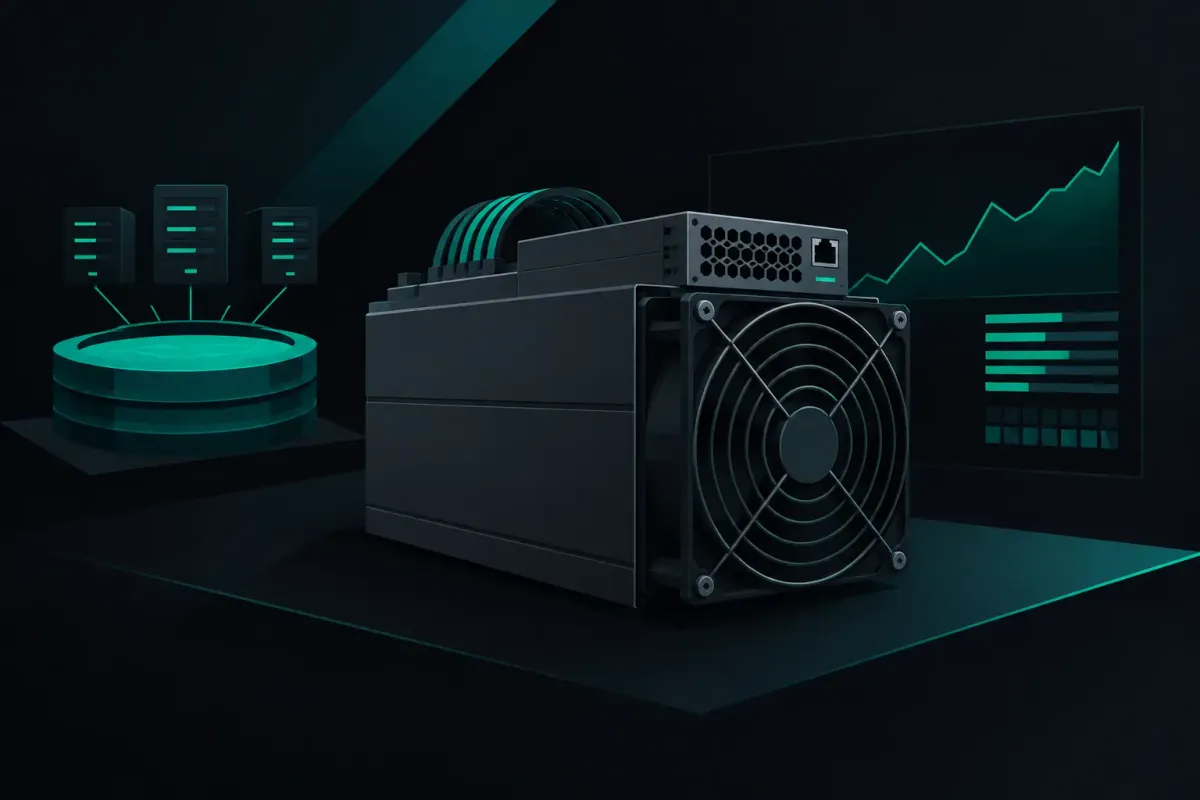
A small miner makes pool behavior easier to see. In this Avalon Nano 3S pool review, the hardware is not the lottery ticket that needs explaining. Network difficulty sets the odds for its hashrate at every pool. The useful question is what happens after the miner sends work, and what happens if it happens to find a valid block.
An Avalon Nano 3S belongs in the home-mining category. It is a compact machine you can watch, restart, and point at a different server without turning a garage into a data center. That makes it a reasonable fit for solo mining, provided the goal is participation in Bitcoin mining and a real chance at a block, not scheduled income.
Solo mining is a lottery. An average wait is not a schedule. A lower network difficulty would mean a shorter expected wait, not a more valuable block or a promise that a small miner will hit. Start there, because no pool setting changes that part.
What an Avalon Nano 3S needs from a pool
The Nano 3S needs a Stratum endpoint, a worker name if its firmware expects one, and a Bitcoin address for a payout. The connection path should be plain enough to inspect before the machine begins hashing.
For Bitcoin solo mining at NexusPool (nexuspool.io), enter solo.nexuspool.io:3350 as the pool address. Use your own Bitcoin address as the username. A worker suffix can identify the device in the miner interface if its firmware supports that convention. The pool does not require an account, an email address, or KYC to accept a valid Bitcoin address.
That is the easy part. The harder part is deciding what a pool is actually responsible for. A pool cannot make the Nano 3S find a block more often than its hashrate and Bitcoin network difficulty allow. It can avoid adding avoidable failure between the machine and the Bitcoin network.
For a home miner, that means four practical checks: whether new work arrives promptly, whether submitted shares have readable outcomes, whether a found block is sent onward reliably, and whether the coinbase payout is built for the address you supplied.
The payout is the first thing to inspect
A solo pool should not hold a successful miner's block reward in an internal balance. If the Nano 3S finds a block, the block subsidy and transaction fees should pay to the Bitcoin address placed in the block's coinbase transaction.
NexusPool shows this through Payout Preflight. It constructs the payout for a miner's address on the current block template before that miner finds anything. This does not predict a find. It shows where the reward would go if the device found the winning share on that work.
That distinction matters. A dashboard balance is a promise about a later payout. A coinbase output in a candidate block is something a miner can examine before mining it. If a block is found, the relevant check moves from the preflight view to the block itself and its transaction on Bitcoin.
A 0% pool fee is simple in this context. The whole block reward, including transaction fees, is assigned to the miner's address in the found block. It is not a claim about odds, returns, or the time required to find a block.
New work matters more than a glossy dashboard
When Bitcoin finds a new block, miners should move to work based on the next block as soon as possible. Hashing on an old block after the network has moved on cannot produce the next valid block.
There is a limit worth stating clearly. Before a pool node has finished validating a newly seen block, it may prepare work from the new block header. That first job carries no transactions. Later work can include the transaction set after validation completes.
On NexusPool's Frankfurt server, the median time from receiving a header to preparing work was 0.49 milliseconds across 162 mainnet blocks measured on September 10 and 11, 2026. In that measurement, work was ready 205 milliseconds before block validation completed. This is a measurement of one server, on those dates. It is not a promise about a home network, a particular Nano 3S, or every future block.
Your own round-trip time still matters. A miner far from the pool's regions will see a longer delay between its machine and the server. That affects how quickly new work and status changes reach the device. It does not change the probability set by the Nano 3S hashrate and Bitcoin difficulty.
A pool should explain rejected shares
A home miner does not need to read protocol messages all day. It does need to know whether a red error count represents a local problem, stale work, a duplicate submission, or a malformed request.
The useful standard is specific reasons. NexusPool reads Stratum V1 shares in the form the firmware sent and returns a reason for shares it reads and rejects. If a rig goes quiet for a few minutes, the pool holds its assigned difficulty rather than immediately treating a returning device as a brand-new connection.
This is not a feature that adds luck. It is ordinary handling that makes a small machine easier to diagnose. If the Nano 3S reports a run of rejections, first check its displayed pool URL, username, network connection, clock, and firmware settings. Then compare the device's local messages with the pool's stated rejection reason.
A low-power home miner can also be interrupted by routine things: a Wi-Fi reconnect, a router reboot, a power flicker, or a firmware update. A pool cannot repair those events from its side. It can make the server-side outcome less opaque when the miner returns.
What happens if a Nano 3S actually finds a block
This is the test that separates a solo pool's mechanism from its marketing.
A valid block found through NexusPool's Los Angeles, Chicago, or Frankfurt region is written to disk first. The pool then sends it to Bitcoin nodes in those three cities and retries submission for up to five minutes. Singapore submits a found block to its own node. After a restart, the pool submits a pending block again.
Those details are not a guarantee that no block can ever lose a race on the Bitcoin network. Bitcoin mining has competing blocks, propagation delays, and normal network failure modes. They do describe the path after a valid result reaches the pool.
For a Nano 3S owner, the most useful outcome is still easy to state: if the machine finds a valid block, the reward belongs at the address configured before the find. There should be no withdrawal request, payout threshold, or account review between the block and the address inside it.
Is the Nano 3S a sensible solo-mining machine?
It depends on what “sensible” means. It is sensible for a home miner who wants a visible, manageable Bitcoin miner and accepts that solo mining may produce no block for a very long time. It is not sensible for someone who needs predictable income or expects a compact miner to behave like a fleet.
The Nano 3S also makes a good pool test device because its setup is simple. Change one variable at a time. Record the endpoint, your payout address, the worker label, connection status, and rejection messages. Confirm that the address shown in any payout preview is yours. If the machine has a setting for backup pools, understand which endpoint it will use after a failure before leaving it unattended.
Do not judge a pool by a few hours of luck. A short period without a block says nothing useful about a small miner's odds. Judge the parts you can inspect today: where the machine connects, what it is told when a share fails, what address appears in the candidate payout, and what the pool says it does after a valid block arrives.
Point the Nano 3S at solo.nexuspool.io:3350, use an address you control, then inspect the payout before you mine. Trust nothing. Verify your payout.