home miners
Best Lottery Mining Hardware for Home Miners
Choose the best lottery mining hardware by checking hash rate, wall power, noise, firmware, and the solo pool connection before you buy a rig for home use.
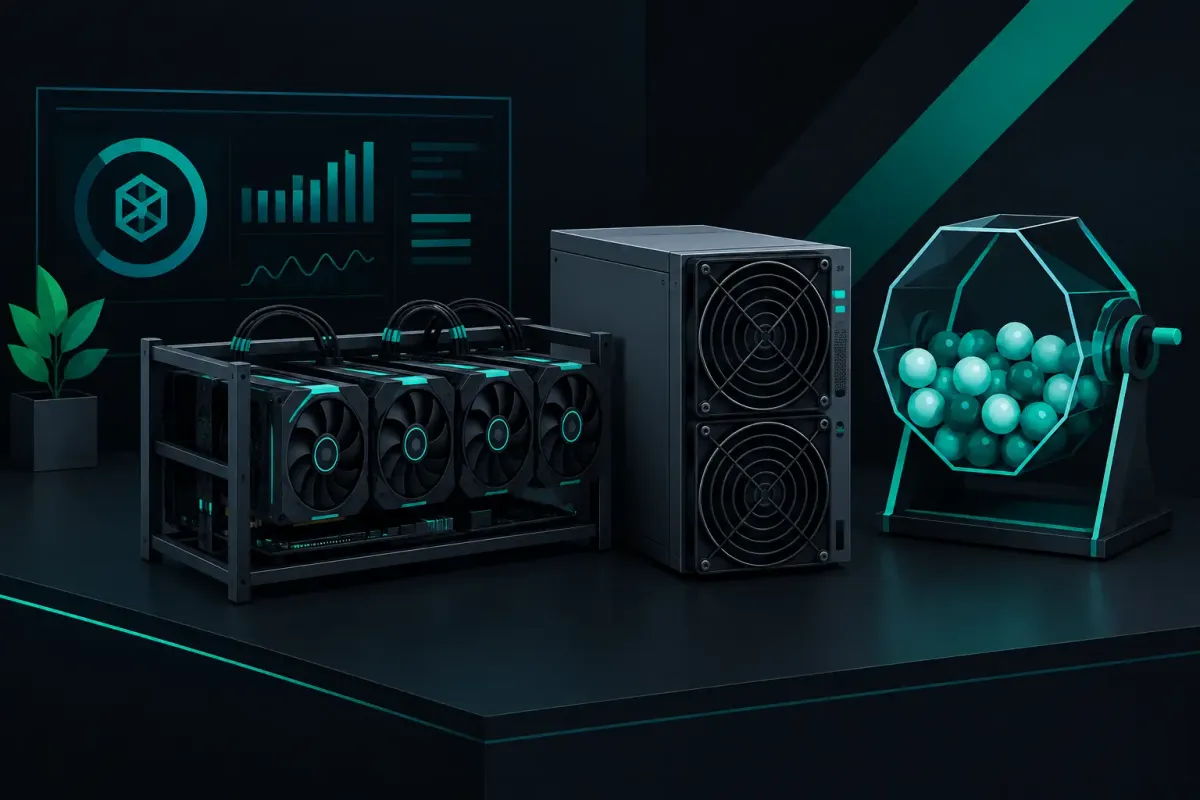
A lottery miner is easy to buy and hard to judge from a product page. The best lottery mining hardware is not automatically the device with the highest advertised hash rate. For a home miner, the right rig is the one you will keep running safely, can measure at the wall, and can point at a solo endpoint without handing anyone custody of your Bitcoin.
Solo mining is a lottery. An average wait is not a schedule. Network difficulty and your hashrate set the chance of finding a block. The pool you connect to cannot change those odds. Hardware still matters because it determines how much hash rate you contribute, how much heat you make, and whether the machine belongs on a desk, in a garage, or nowhere near your living space.
What makes the best lottery mining hardware?
Start by separating two jobs that product listings often blur together. One job is mining Bitcoin with a meaningful amount of hash rate. The other is learning how a miner behaves, running a visible piece of hardware, and taking part in the lottery at a household power and noise level. Both are valid. They require different machines.
A small open-source miner such as a Bitaxe Gamma, Gamma Duo, GT, Touch, NerdQaxe++, NerdOCTaxe, or Avalon Nano 3S is usually the sensible place to start at home. These devices are small enough to inspect, often have readable local interfaces, and make their heat and sound obvious before they turn into a household argument. Their hashrate is small beside a full ASIC. That is the limit, not a hidden footnote.
A standard ASIC in the S19 or S21 class belongs in a different category. It can contribute far more hash rate, but it also demands a real plan for electrical circuits, ventilation, noise, and replacement parts. Calling one a home miner does not make it a desk appliance. Read the electrical label, confirm the outlet and circuit, and account for the heat before it arrives.
The best choice depends on what constraint is real for you. If the limit is noise, choose the smallest machine you are willing to run. If the limit is available power and airflow, measure those first and choose after. If the goal is operating a small farm, prioritize predictable fleet management and serviceability over a compact enclosure.
Hash rate sets your share of the lottery
For Bitcoin solo mining, a device's hash rate changes its own expected rate of finding a block. A higher-hash-rate device has more chances over time than a lower-hash-rate device. It does not turn a low-probability event into a scheduled payout.
Do not use a single lucky block story to select hardware. It says almost nothing about what your unit will do next week. Compare a model's sustained, measured hash rate instead of its peak claim. If a manufacturer gives a range, treat the lower end as the planning figure until you can verify the unit yourself.
Difficulty also changes over time. A lower network difficulty means a shorter expected wait at a given hashrate. It does not make a block worth more, and it does not promise that a miner will find one before difficulty changes again.
Wall power is the number that reaches your bill
Hash rate without wall power is incomplete. Measure watts at the outlet after the miner has warmed up and settled. The device's screen or firmware may report useful figures, but your electrical system pays for what the meter sees.
Power also becomes heat. A miner consuming 100 watts is placing roughly 100 watts of heat into the room. A full ASIC consuming several kilowatts needs deliberate heat removal. A fan pointed toward an open window may be enough for a small miner. It is not a cooling design for a large one.
Efficiency matters, but home mining has a practical threshold before efficiency becomes the deciding factor. A quiet 50-watt miner that you can run consistently may fit your life better than a louder machine that you must switch off every evening. That does not make the small unit more likely per hash. It makes it more likely to remain connected.
Noise is a specification, not a minor inconvenience
Fan noise changes with ambient temperature, fan settings, and dust. A stated decibel number is useful only if it includes distance, environment, and operating mode. If it does not, treat it as a rough clue.
Small miners can still sound sharp in a quiet room. Full ASICs often produce enough continuous fan noise to require an isolated space. Plan for the sound at night, not only while you are excitedly setting up the machine at noon.
Do not solve noise by starving a miner of airflow. Restricting intake or exhaust can raise temperatures and force fans harder. If you use an enclosure, it needs a defined air path and a way to check temperatures under load.
Choose hardware you can inspect and control
A lottery miner should not require blind trust in a dashboard. Look for a model with readable local status: current hash rate, chip or board temperatures, fan speed where applicable, accepted work, and errors. You need those signals when a device begins throttling, disconnects, or silently runs below its expected rate.
Firmware support deserves the same attention as the hardware revision. Check whether the device is still sold, whether its firmware is maintained, and whether recovery instructions exist. A cheap miner with no practical recovery path can become an e-waste project after one bad update or failed power supply.
For open-source ESP32-class miners, community documentation can be useful, but confirm which board revision the instructions cover. A guide for one Bitaxe generation may not match another. For conventional ASICs, verify the controller, power requirement, and cooling arrangement for the exact unit rather than the family name on the listing.
A simple buying check has five parts:
- Confirm sustained hash rate from a source that identifies the exact model and firmware.
- Confirm wall power, connector type, voltage, and circuit capacity.
- Confirm the noise and heat fit the room where it will run.
- Confirm you can view status locally and recover the firmware.
- Confirm the miner supports the pool connection method you intend to use.
The fifth check prevents a boring failure. Most home miners speak Stratum V1. That is fine if the pool accepts it. Do not buy hardware because a protocol label sounds newer when the rig cannot use it.
The pool connection is part of the hardware decision
Before buying, find the exact connection format the miner needs. You should know where the payout address goes, where an optional worker name goes, and which port the device will use. If the setup path is unclear before purchase, it will not become clearer while a fan is screaming and a browser page is timing out.
On NexusPool (nexuspool.io), Bitcoin miners connect to solo.nexuspool.io:3350 with a Bitcoin address and no account. The same port accepts Stratum V1 and encrypted Stratum V2. A home miner that only supports V1 can use the ordinary connection path. A miner that supports V2 can use its encrypted path without moving to another endpoint.
The address matters because it defines where a found block reward is constructed to go. The block subsidy and transaction fees go to that address. A pool cannot decide later to place them in an account balance that it controls. Payout Preflight lets a miner inspect the payout built for that address on the current block before the miner finds anything.
Connection quality is separate from luck. A miner far from the available regions may see a longer round trip for new work and status updates. That does not change the odds set by its hashrate and network difficulty. It can matter operationally, especially for a larger setup, because old work and delayed diagnostics are still work you want to see clearly.
A sensible first setup
For most first-time home solo miners, choose a small device with an active local interface, known power requirements, and a noise level you can tolerate. Run it on a metered outlet for a few days. Record its wall power, temperatures, reported hash rate, and any reconnects. Then decide whether you want a second small miner or a move into equipment that needs dedicated power and ventilation.
For a small farm, make the test stricter. Run one unit through power interruptions, router restarts, and a warm day before scaling the fleet. Watch how it reconnects and whether its reported work returns to the expected level. A mining rig is not just a hash rate number. It is a computer, power load, heater, and network client sharing one enclosure.
Buy the machine you can run, measure, and maintain. Then point it at the endpoint, check the payout for your address, and let the lottery remain a lottery. Trust nothing. Verify the payout before you mine.