Bitcoin Mining
Bitcoin Miners Sold 108K BTC: By the Numbers
Public Bitcoin miners sold over 108,000 BTC in 2026 to fund AI data center buildouts. Here is what the sales and the next difficulty move mean for solo miners.
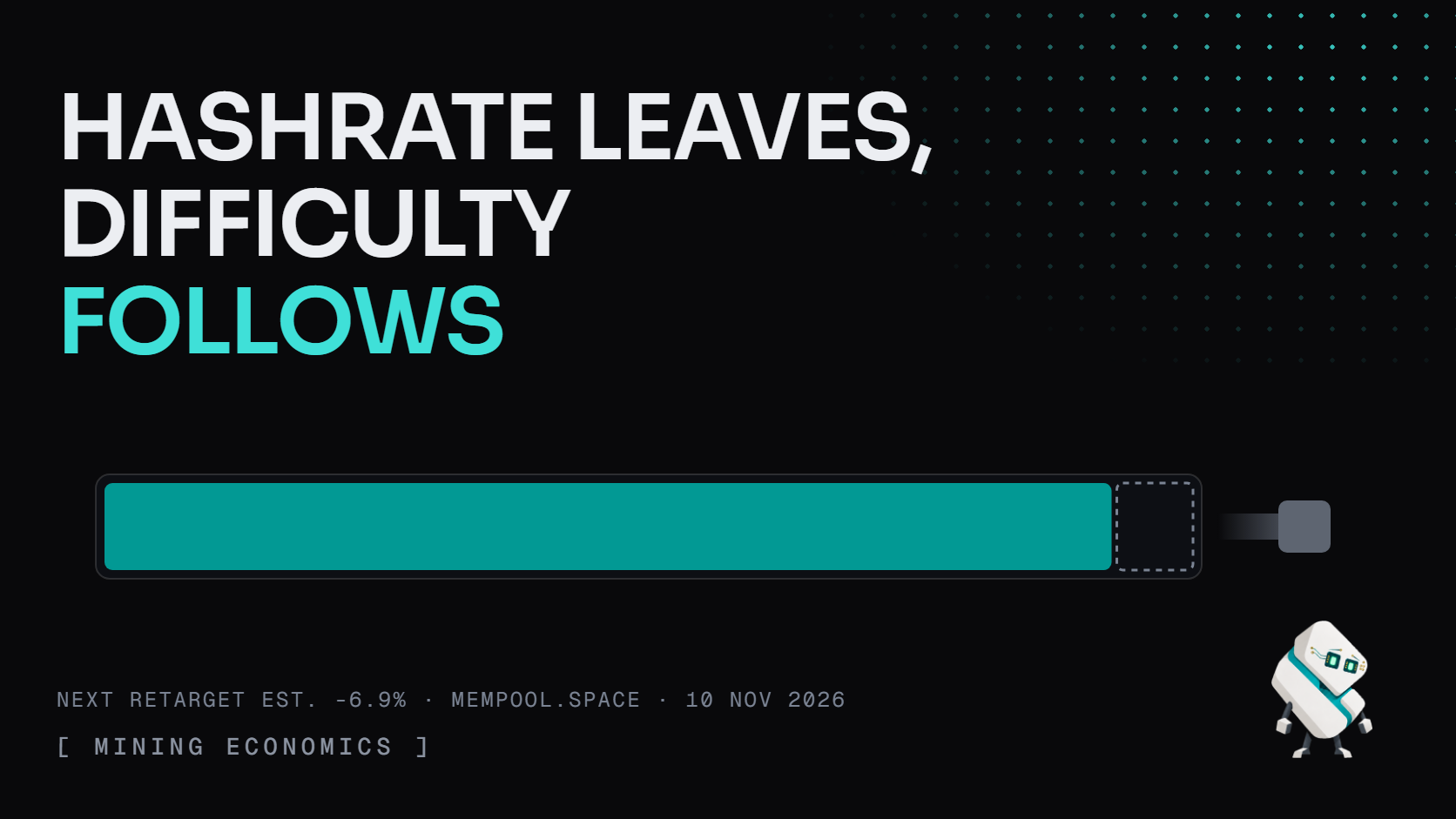
Fourteen public Bitcoin mining companies have sold a combined 108,247 BTC so far in 2026. That is the number driving this week's mining headlines, reported from on-chain analytics on November 10, 2026. It sits next to a second number worth watching: Bitcoin's mining difficulty, last set at 148.36 trillion on October 29, is on course to fall at its next adjustment, expected around November 13. On the morning of November 10, the open-source explorer mempool.space put that drop at roughly 6.9 percent.
Those two numbers are connected. When large miners sell coin and redirect capital toward AI infrastructure instead of new hashing hardware, less computing power eventually competes for the same blocks. Difficulty is Bitcoin's way of keeping block production at roughly one every ten minutes regardless of how much hashrate shows up, so when hashrate growth slows or reverses, difficulty follows it down at the next retarget. None of this changes what a block pays, and it does not improve anyone's odds relative to anyone else, but it does shift the math behind how long a solo miner can expect to wait. Here is that math, broken out by the numbers that actually matter.
The number: 108,247 BTC in Bitcoin miners' treasury sales
On-chain analytics reported by crypto.news put the combined 2026 treasury sales from 14 public Bitcoin miners at 108,247 BTC, worth about $8.08 billion at the time of sale. One of those 14 accounts for the largest single slice: 40,581 BTC, worth roughly $3.03 billion, and it has said it plans to sell more. That leaves 67,666 BTC sold across the other 13 companies combined (108,247 minus 40,581), a reminder that this is a sector-wide shift, not one company's decision.
The destination for that capital is consistent across most of these companies: AI and data-center infrastructure rather than new mining rigs. At least one other public miner has said it is redirecting resources toward AI hosting, a pattern several public miners have repeated through 2026 as mining margins compressed. Selling the treasury to fund that pivot is a capital-allocation decision, not a signal about Bitcoin's health, and it is worth treating it as exactly that and nothing more.
What it does to Bitcoin mining difficulty
| Figure | Value | Source / status |
|---|---|---|
| Current difficulty (set Oct 29, 2026) | 148.36 trillion | Confirmed, last retarget |
| Network hashrate, 7-day average | 1,062 EH/s to 979 EH/s over the week to Nov 9 | Hashrate Index weekly roundup |
| Next retarget | block 975,744, ~Nov 13, 2026 | Estimated date |
| Estimated change | around -6.9% (Nov 10) | Estimate, not yet locked in |
| Estimated new difficulty | ~138.1 trillion | 148.36T x 0.931 |
Difficulty retargets every 2,016 blocks, roughly every two weeks, based on how fast those blocks actually arrived. Blocks in the current window have averaged close to 10 minutes 45 seconds instead of ten, which is why the estimate points down, and it tracks with the hashrate pullback in the table above.
The estimate is a moving number, and this week shows how much it moves. It stood near -2.8 percent on November 2, near -4.8 percent on November 8, and near -6.9 percent on November 10. A run of fast blocks before the retarget would shrink it; a slow run would deepen it. Treat the figure as the current estimate, not a locked number, until block 975,744 is actually mined.
What it does to a solo miner's expected wait
This is the part that actually matters to someone running their own rig instead of a balance sheet. Difficulty, not any pool, sets the odds of finding a block, and that is true at every pool a rig points at, NexusPool included. A pool can change how fast a found block gets to a node, or what a miner can verify about the work it counted; it cannot change how often a block gets found by a given amount of hashrate. The honest way to see what the numbers above mean is to run them.
The math is short. Finding one block takes, on average, difficulty times 2^32 hashes. At 148.36 trillion, that works out to about 6.37 x 10^23 hashes, the same work a network of about 1,062 EH/s does in ten minutes. Divide it by a rig's own hashrate and the result is that rig's expected wait for one block. An average is not a schedule. Plenty of rigs run for years and find nothing while a newer, smaller setup finds one in its first week; that is the variance solo mining runs on.
| Rig example | Hashrate | Expected wait at 148.36T | Expected wait at an estimated 138.1T |
|---|---|---|---|
| Single open-hardware board | 1.2 TH/s | ~16,830 years | ~15,670 years |
| Small home rack | 100 TH/s | ~202 years | ~188 years |
| Larger solo setup | 1 PH/s (1,000 TH/s) | ~20.2 years | ~18.8 years |
Every wait-time figure above uses the same two inputs: the rig's own hashrate and the difficulty (current, or its estimated 6.9 percent lower version for the second column). The ratio between any two rows holds whatever the final retarget turns out to be. A roughly 6.9 percent difficulty drop shortens the expected wait by roughly 6.9 percent, no more and no less. It is a small, real shift, not a reason to expect a different outcome than the one the math already described.
What does not change
A smaller difficulty means a shorter expected wait, not a better rig and not a higher chance of winning "this time." Nothing here improves anyone's odds relative to anyone else pointed at the same network. If difficulty falls and idle machines return, the following retarget, about two weeks later, can push it back up. This is a description of mining economics, not an investment recommendation, and none of these numbers are a promise that any specific rig finds a block in any specific window.
What a pool actually controls is what happens around those odds, not the odds themselves. NexusPool takes 0% of the block reward, and because it is non-custodial, the coinbase transaction that pays a solo find goes straight to the miner's own address. There is no balance sitting at NexusPool for a miner to wait on or for a company like the ones above to decide whether to sell. NexusPool's Payout Preflight tool builds that exact coinbase from the current block before anyone finds anything, so a miner can see where their own payout would land ahead of time. Each hour, the pool also signs a receipt covering the shares it counted from a given rig, posted as part of the Glass Ledger, checkable against a key NexusPool publishes. Neither of those changes the odds table above by one digit. They mean a miner does not have to take the path between a found share and a paid block on faith.
The numbers, put back together
108,247 BTC sold. A difficulty estimate that moved from -2.8 to -6.9 percent in eight days and will not be final until November 13. A wait-time table that moves by exactly the final percentage and nothing more. None of those numbers describe a shortcut, and none of them belong to any single pool, NexusPool included. The useful move is not to read a trend into a two-week estimate; it is to take the same two inputs, a rig's own hashrate and the current difficulty, and run the math above for whatever is actually plugged in, using NexusPool's technology page to see how shares from that rig get read and tested before reading anything further into the headlines.
Trust nothing. Verify the math behind your own wait, not the headline about someone else's sale.