Found Block
Found Block Broadcast Path When Your Rig Finds One
Understand the found block broadcast path, from a rig's winning share to disk, node delivery, retries, and the reward transaction built for your address.
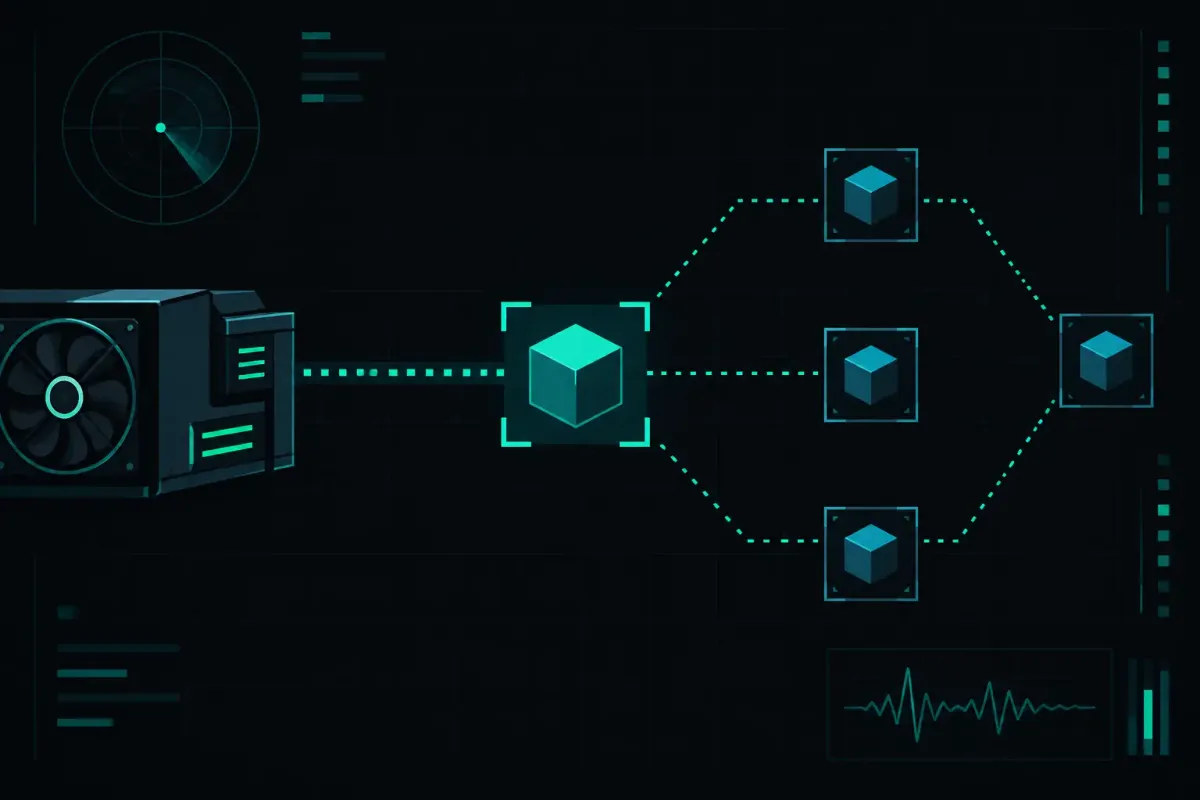
A found block is not finished when a rig sends the share. That is where the found block broadcast path starts. The pool must recognize the share correctly, preserve the block, submit it to a Bitcoin node, and keep trying if a process restarts or a node is unavailable.
For a solo miner, this path matters because the reward is tied to one event. There is no balance waiting in a pool account. If your rig finds a valid Bitcoin block through NexusPool (nexuspool.io), the block's coinbase transaction pays your Bitcoin address. It includes the block subsidy and transaction fees. The pool fee is 0%.
That does not change your chance of finding the block. Network difficulty sets those odds at every pool. Solo mining is a lottery. An expected wait is not a schedule. The job of the pool is narrower: carry a valid block from your rig to the Bitcoin network without misreading or dropping it.
The found block broadcast path, step by step
Your rig first receives a mining job. It hashes candidate block headers against the network target. Most submitted shares only show that the rig is working at its assigned share difficulty. A found block is different. Its hash meets Bitcoin's current network target.
The pool reads that submission in the format your firmware sent. It checks the submitted fields and tests the resulting block candidate. If the candidate meets the network target, it is a block to submit, not merely a share to count.
The candidate goes to disk first. Disk storage comes before network submission so a pending block remains available if the submission process restarts. A restart does not make a found block disposable. The pool submits a pending block again after it comes back.
For Bitcoin blocks found through Los Angeles, Chicago, or Frankfurt, the pool then sends the block to Bitcoin nodes in all three of those cities. Each submission is retried for up to five minutes. This gives one node's temporary problem less power over the result.
Singapore follows a narrower path. A block found through Singapore is sent to its own Bitcoin node. It is not part of the three-city submission group. That limit matters when reading any claim about block delivery.
A Bitcoin node still decides whether to accept the block. The pool cannot force acceptance. A valid block can also lose a race when another valid block reaches the network first. That is a property of competing blocks at the same height, not a payout decision made by the pool.
Why disk comes before broadcast
Network delivery is not a single request with a guaranteed outcome. A process can restart. A connection can fail. A node can be busy or temporarily unreachable. If the only copy of a found block existed in memory, a failure at the wrong moment could erase the submission task.
Writing the candidate to disk makes the task durable before the first node call. The pool can see that a block remains pending and submit it again after a restart. It can also continue retries while the five-minute retry window remains open.
This does not mean a disk copy makes the block valid. Bitcoin consensus rules decide that. It means the pool has retained the candidate it needs to submit.
The distinction is practical. A miner does not need a promise that every network condition will cooperate. They need to know what happens when it does not. The answer is a stored pending block, repeated node submissions, and a defined retry period.
The work before the found block matters too
A found block path begins before the found share. Your rig can only work on the block template it receives. When the Bitcoin network moves to a new tip, old work becomes less useful because it builds on the previous block.
NexusPool prepares new work from a received block header before its local node finishes full block validation. On the Frankfurt server, the median time from header receipt to new work was 0.49 ms. The new work arrived 205 ms before validation finished across 162 mainnet blocks measured on September 10 and 11, 2026.
That first job carries no transactions. It is a temporary template built to get rigs onto the new block height quickly. The pool replaces it after validation and transaction selection are available.
The measurement has a narrow scope. It describes Bitcoin work on Frankfurt during those two dates and that sample. It does not describe Bitcoin Cash or Litecoin. It does not promise the same timing from every network or every miner location.
Distance still matters to the handoff. A miner far from Los Angeles, Chicago, Frankfurt, and Singapore has a longer round trip for new jobs and share responses. That can affect how quickly the rig learns about new work. It does not alter the probability of a given hash finding a block.
A bad share message should not become a mystery
Most home miners will never send a network-valid block. They will still see accepted shares, rejected shares, reconnects, and periods when a device goes quiet. Those details are part of the same path because a pool must interpret the bytes sent by the rig before it can recognize an exceptional share.
The pool reads Stratum V1 shares as the firmware wrote them. It gives the rig a reason for a share it rejects. A reject may come from stale work, an invalid field, insufficient share difficulty, or another specific condition. “Rejected” without a reason is not useful diagnostics.
The pool also holds a rig's assigned difficulty when the rig is quiet for a few minutes. A brief Wi-Fi interruption or restart should not automatically cause a difficulty change based on a tiny set of returning shares. For low-hashrate hardware, that avoids making a short outage look like a permanent change in performance.
The connection path is one address: solo.nexuspool.io:3350. A miner connects with its Bitcoin payout address and no account. The same port accepts Stratum V1 and encrypted Stratum V2. Most small miners use Stratum V1 today, so the direct setup remains simple.
Check the reward before the rare event
A broadcast path answers what happens after a valid block arrives. It does not answer a separate question: where will the reward go if one arrives?
Payout Preflight builds the payout for your address on the current block before your rig finds anything. You can inspect the transaction output that would pay your address. This is the useful check for a solo miner because it happens before luck enters the picture.
The current block can change, so a preflight result is tied to the block it was built for. A new Bitcoin block changes the template. Transaction fees can change with the next template as well. The address is the part you control. Check it carefully before connecting a rig.
If a block is found, the coinbase transaction is inside that block. The subsidy and fees do not become a dashboard balance for the pool to release later. They pay the address in the transaction, subject to Bitcoin's normal coinbase maturity rule before the output can be spent.
A solo miner cannot make the lottery predictable by selecting a pool. Network difficulty and hashrate set the expected wait. What you can inspect is the route taken after a found share and the destination written into the reward transaction.
Before you mine, run Payout Preflight for your address. Then point the rig at solo.nexuspool.io:3350. Trust nothing. Verify the payout built for your address.