Block Rewards
Can a Pool Hold Rewards? Know Where They Land
Can a pool hold rewards? Learn when a mining pool controls a payout, when a Bitcoin block pays your address directly, and what you can check before mining.
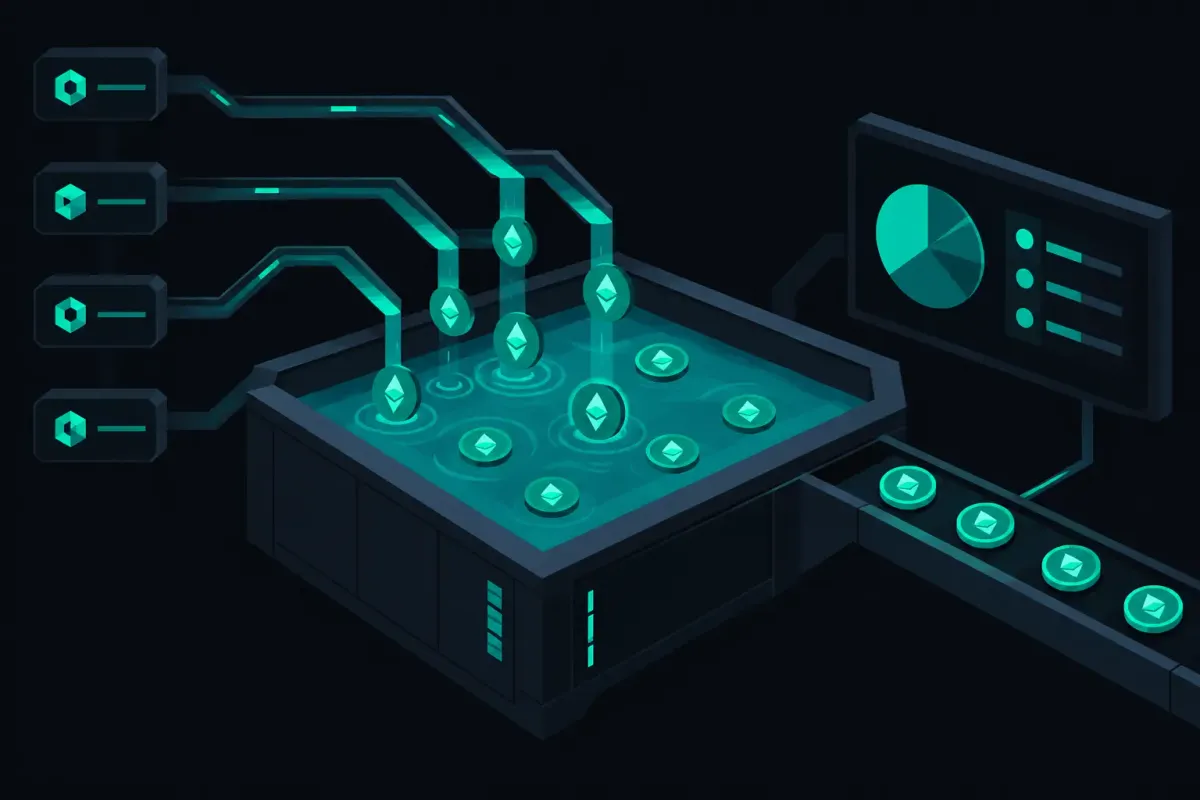
A miner asks, “can a pool hold rewards?” because the answer decides who controls the money between a found block and a spendable Bitcoin output. The word “pool” covers two very different arrangements. In one, the pool receives money first and later credits or pays miners. In the other, a block pays the miner’s Bitcoin address in the block itself.
That difference is visible on-chain. It is not a matter of a dashboard balance, a promise of later payment, or the label on a payout method.
Can a Pool Hold Rewards?
Yes, a pool can hold rewards if its payout design sends funds to an address it controls before it pays miners. This is common in shared-reward mining. The pool receives the block reward or receives revenue from mined blocks, calculates each miner’s share, and creates payouts later. Until that payout transaction confirms, the miner has a claim on the pool, not coins at an address they control.
That arrangement is not automatically wrong. It is how many systems turn irregular block finds into frequent smaller payments. It also creates a custody question. The pool must keep accurate records, retain enough funds, and send the payment it calculated. A site balance is an accounting entry. It is not a Bitcoin UTXO in your wallet.
A pool can also hold a reward temporarily for operational reasons. A Bitcoin coinbase output cannot be spent until it has 100 confirmations. If the pool receives that coinbase output, it cannot send those specific coins immediately. It may pay miners from other funds, or it may wait for maturity. Either way, the miner must know which address received the block reward first.
The useful question is more specific: does the found block pay the pool, or does it pay the miner’s address?
A Direct Block Payout Leaves Nothing for the Pool to Hold
Solo mining can use a direct payout design. When a rig finds a valid Bitcoin block, the coinbase transaction in that block creates an output to the miner’s own Bitcoin address. The block subsidy and the transaction fees go there together.
The output still has Bitcoin’s 100-block coinbase maturity rule. That is a consensus rule, not a pool hold. The important distinction is custody. The coins are assigned to the address in the block, and the pool does not have a balance to release later.
This is easy to check after a block is found. Read the coinbase transaction. Its output script identifies the receiving address or script. Check that it belongs to the address you configured. Then wait for maturity before attempting to spend the output.
There is a trade-off. A direct solo payout does not turn solo mining into regular income. Solo mining is a lottery. An average expected wait is not a schedule. Network difficulty sets the odds at every pool, and your hashrate determines your share of those odds. A lower network difficulty means a shorter expected wait, not more value in a block.
What direct payout removes is the later payment step. If the block pays your address, there is no internal balance for the pool to withhold, lose in a bookkeeping error, or send to the wrong withdrawal address.
The Payout Address Must Be Set Before the Find
A Bitcoin block cannot be edited after the network accepts it. The payout output is built before your rig finds the winning hash. That makes the setup check more useful than a post-win explanation.
Connect the rig with the Bitcoin address that should receive a found block. Do not use an exchange deposit address unless that service explicitly supports receiving coinbase outputs after maturity. A wallet address you control is simpler to verify and avoids relying on an exchange’s deposit policy.
The worker name can identify a machine for your own records, but it does not replace the payout address. Check the exact address in the rig configuration. Check it again in the pool’s displayed payout construction if that is available. One wrong character changes who receives a block.
NexusPool (nexuspool.io) exposes Payout Preflight for this purpose. It builds the payout for your address on the current block before your rig finds anything. You can inspect where the subsidy and current transaction fees would go under the current template. The result will change as a new Bitcoin block arrives and as transaction fees change, but the receiving address is the part to verify first.
For Bitcoin, the connection endpoint is solo.nexuspool.io:3350. A miner can connect with a Bitcoin address and no account. The same port accepts Stratum V1 and encrypted Stratum V2. That removes the need to create a pool account merely to establish where a direct block payout should land.
A Pool Still Has Work to Do Without Holding Your Coins
Direct payout does not mean the pool is absent from the path. The pool provides work to the rig, reads submitted shares, recognizes a block candidate, and gets a found block to Bitcoin nodes. Those steps affect whether your existing chance reaches the network correctly. They do not change the odds set by network difficulty.
A pool builds a candidate block template and sends a job to the rig. The rig tests hashes against the target. Most submitted shares only show that the rig is working at its assigned difficulty. A share that meets Bitcoin’s network target is a block candidate.
At that point, the pool must read the candidate as the firmware sent it, reconstruct the block correctly, persist it, and submit it to nodes. If a found block is lost or malformed during that path, a direct payout address cannot repair it. The address only answers custody after a valid block exists.
This is why a serious solo setup separates two questions. First: where will the reward land if the rig finds a block? Second: what can you inspect about the path from submitted work to network submission?
For a home miner, start with the first question. Confirm the address and inspect the proposed payout before mining. For an operator with several machines, the second question matters more often. Ask what the pool reports when a share is rejected, whether a quiet rig keeps its assigned difficulty for a short interruption, and what happens if a region restarts after a block candidate reaches disk.
Those are operational checks. They are not claims about luck.
Why a Dashboard Balance Is Not the Same Thing
A dashboard can show several kinds of numbers, and treating them as equivalent causes confusion. A pending balance may be an estimate under a shared-reward formula. A confirmed balance may be an internal credit. A withdrawal balance may be eligible for a payout. None of those labels alone identifies a Bitcoin output you control.
A direct solo payout has a different evidence trail. Before a find, inspect the proposed payout address. After a find, inspect the coinbase transaction in the accepted block. After 100 confirmations, the coinbase output is mature. Your wallet can then spend it with the key for that address.
Transaction fees deserve the same check. A direct-payout claim should cover both parts of the coinbase reward: the fixed block subsidy and the fees from transactions included in that block. Fees are not known far in advance because the block template changes. A preflight view can show the current construction, while the accepted block is the final record.
Do not confuse this with a guarantee that a particular transaction will be included. Work sent immediately after a new block can prioritize getting miners onto the new height. A pool may send an initial job without transactions before its node finishes validating the new block. That is a propagation decision, not a statement that the final found block would contain no fees.
What to Check Before You Point a Rig
The practical check is short. Put your own Bitcoin address in the rig’s pool configuration. Confirm the endpoint is exactly solo.nexuspool.io:3350. Inspect the displayed payout construction for that address before you mine.
Then keep the distinction clear. A pool balance can be held because the pool received the money. A coinbase output addressed to you cannot be held by the pool, although Bitcoin requires it to mature for 100 blocks. Neither arrangement changes the chance that your hardware finds a block.
Point a rig at the endpoint only after you can answer one plain question: if this machine finds the current block, which address appears in the coinbase transaction? Trust nothing. Verify your payout address before you mine.