Stratum V2
Can Bitaxe Use Stratum V2? What Decides It
Can Bitaxe use Stratum V2? Check whether AxeOS, your pool endpoint, and your settings support native encrypted mining before changing protocols on purpose.
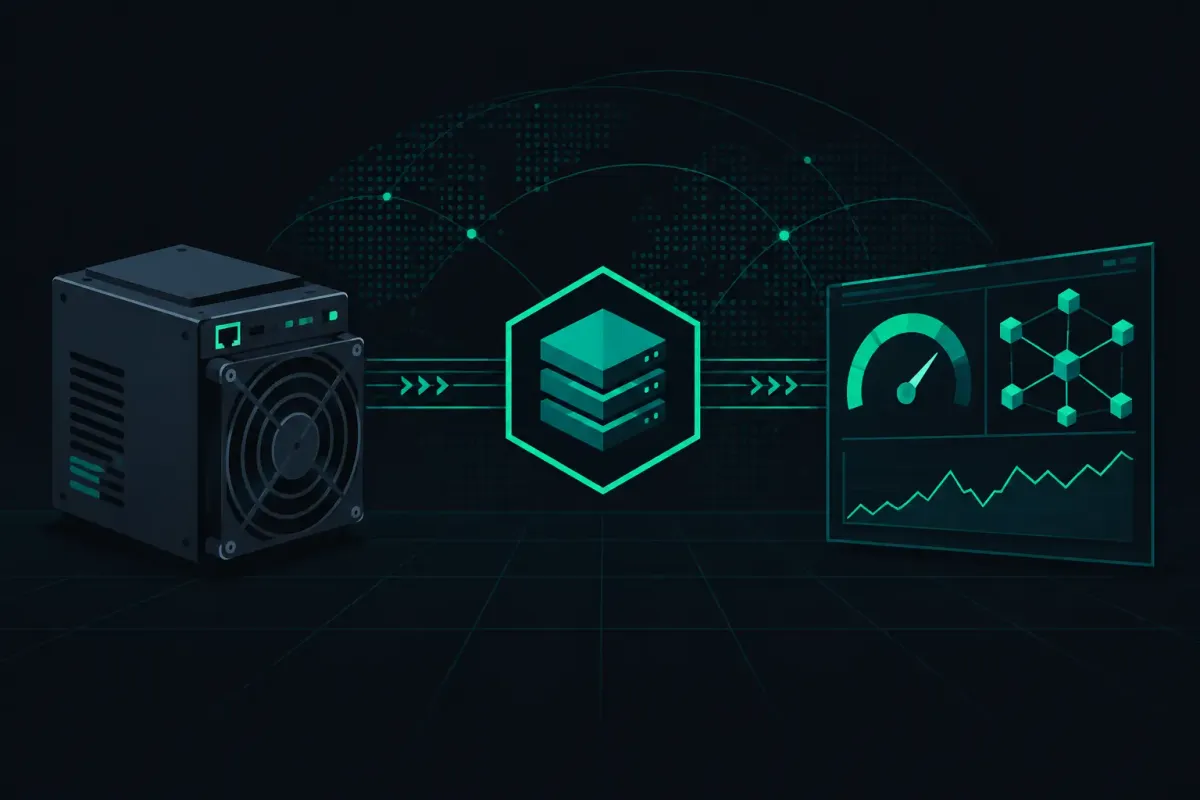
A Bitaxe does not become more likely to find a block because it speaks a newer mining protocol. The question, can Bitaxe use Stratum V2, is about the path between your miner and the pool: who can assign work, whether the connection is encrypted, and what you can verify along the way. Your odds remain a function of hashrate and network difficulty. Protocol choice does not negotiate with math.
The short answer is yes, a Bitaxe can use Stratum V2 when the firmware installed on it supports V2 and the pool accepts a native V2 connection. The important word is native. Bitaxe hardware is capable, but hardware alone does not choose the protocol. Firmware does.
Can Bitaxe Use Stratum V2 Natively?
Current Bitaxe miners running compatible AxeOS firmware can speak Stratum V2 directly. That matters because a direct V2 connection avoids placing a translation proxy between your miner and the pool.
Many ASICs still speak Stratum V1 only. They can reach a Stratum V2 pool through a translator, which converts V1 messages into V2 messages. Translation can be useful when it is the only practical route, but it is not the same thing as the miner itself using V2. The device still sends V1 to the translator. The translator becomes another system that must be configured, secured, updated, and trusted to behave as expected.
For a Bitaxe owner, native support is simpler. Configure the firmware for a V2-capable pool endpoint, provide the required pool identity and payout information, confirm the connection, then inspect the miner's status. No separate translator host is required.
That does not mean every Bitaxe in the wild is already on V2. Bitaxe models run different AxeOS versions, and a miner may be deliberately held on an older release for stability or because its operator has not changed their configuration. Before changing anything, identify the exact firmware version your device is running and read its protocol options. A menu item labeled Stratum is not enough. Confirm that it explicitly offers Stratum V2 rather than only Stratum V1.
What Stratum V2 Changes on a Bitaxe
Stratum V1 was built for a much earlier mining environment. It is widely supported and remains practical, especially for existing ASIC fleets. But its original connection model does not provide encryption by default. A miner that connects over plain V1 can expose pool credentials, job information, and connection metadata to a party able to observe or interfere with the traffic.
Stratum V2 adds a defined encrypted transport based on the Noise protocol framework. It also supports authority-key pinning. In plain terms, the miner can be configured to recognize the public key of the pool authority it expects to reach. A network attacker cannot simply impersonate that authority with a valid-looking hostname.
That is a real security improvement, but it has limits. Encryption protects the connection between the parties using it. It does not prove that a pool pays honestly, does not make a bad payout address correct, and does not rescue a miner from unsafe firmware. It also does not change block-finding probability.
A good rule is to separate the things V2 can prove from the things it cannot. V2 can give your Bitaxe an authenticated, encrypted channel to a known endpoint when the implementation and key configuration are correct. The Bitcoin chain is still where a successful solo-mining payout is ultimately proved. Your miner's local logs are still where you check accepted work and connection behavior.
Check These Three Things Before Switching
First, confirm firmware support. AxeOS is the relevant layer on a Bitaxe. Look for a current release with native Stratum V2 settings. Do not infer support from the model name. A Bitaxe Gamma and an older Bitaxe can both be capable devices while running different firmware releases and configurations.
Second, confirm pool support. A pool may advertise Stratum V2 while requiring a different port, hostname, key, or connection format than its V1 service. Follow the pool's current V2 connection instructions precisely. If the pool publishes an authority public key for pinning, compare every character before saving it. A copied key with one incorrect character is not nearly right. It is wrong.
Third, verify the outcome after the switch. Your Bitaxe should show a live connection, current work, accepted shares, and no recurring protocol or authorization errors. Watch it long enough to distinguish normal startup behavior from a connection that repeatedly drops and reconnects. A green status light or a single accepted share is not a full audit.
If your pool offers both protocols on one endpoint, the configuration can be less disruptive. NexusPool accepts Stratum V1 and native encrypted Stratum V2 on its BTC endpoint, so a compatible Bitaxe can use V2 without adding a translator just to reach the pool. That is useful for small miners because fewer moving parts means fewer places for a quiet misconfiguration to hide.
Configure the Miner Without Guessing
Back up the existing configuration before editing it. Record the current pool host, port, worker name, payout address, frequency, voltage settings, and firmware version. This is not ceremony. If a protocol change coincides with an unrelated stability issue, you need a known-good configuration to return to.
In AxeOS, select Stratum V2 only when the pool provides a native V2 endpoint and the firmware exposes the setting. Enter the endpoint exactly as documented. Use your own Bitcoin payout address wherever the pool expects an account or worker identifier. Solo mining has no reason to route a winning block through a pool-controlled wallet before it reaches you.
Authority-key pinning deserves special care. Obtain the key from the pool's published connection materials, not from a chat screenshot or a copied configuration file of unknown origin. Compare it against a second official presentation of the same key when available. Pinning only helps when you pin the right key.
Then reboot or reconnect the miner as required by the firmware. Check the device log instead of relying only on the dashboard. You are looking for evidence that the V2 handshake completed, the pool was authenticated, jobs arrived, and shares were accepted. Exact log wording varies by AxeOS version, so focus on the sequence rather than one magic phrase.
When Stratum V1 Is Still the Right Choice
V1 is not automatically a mistake. If your firmware does not support V2, your pool does not offer native V2, or a particular V2 implementation is producing errors you have not diagnosed, a correctly configured V1 connection is better than a broken mining setup.
The trade-off is clear. V1 has broad compatibility. Native V2 provides an encrypted, authenticated transport when both endpoints implement it correctly. A translator extends V2 pool compatibility to V1-only miners, but adds an intermediary. Choose based on what your actual device and pool can verify, not on a protocol label.
For a home miner, the practical priority order is straightforward. Keep the Bitaxe on maintained firmware. Use a pool endpoint you can identify. Make sure the payout address is yours. Verify accepted work locally. If you use V2, verify the authority key and handshake rather than assuming a successful connection means everything is correct.
A Protocol Upgrade Is Not a Trust Upgrade
Stratum V2 reduces specific network-level trust assumptions. It does not eliminate every assumption in mining. You still trust your hardware not to be compromised. You still need to validate firmware releases. You still need to inspect where a solved block would pay. And with solo mining, you still accept variance that can be brutal at Bitaxe hashrates.
That last point should remain blunt. A Bitaxe can submit valid work for a very long time without finding a block. Nobody changes your luck. Not a pool, not V2, not a dashboard with a nicer chart. What good infrastructure can do is preserve the evidence: that your miner connected, that its work was received, and that any winning payout was constructed to the address you control.
Use Stratum V2 when your Bitaxe firmware and pool support it natively, then inspect the connection as if a configuration screen could be wrong. It can. Trust nothing. Verify your miner's connection.