Glass Ledger
A Hardware Wallet Flaw Drained Over $100 Million. Here Is What To Check First
A firmware bug quietly weakened seed generation on a hardware wallet, and attackers drained over $100 million. Here is what solo miners should check first.
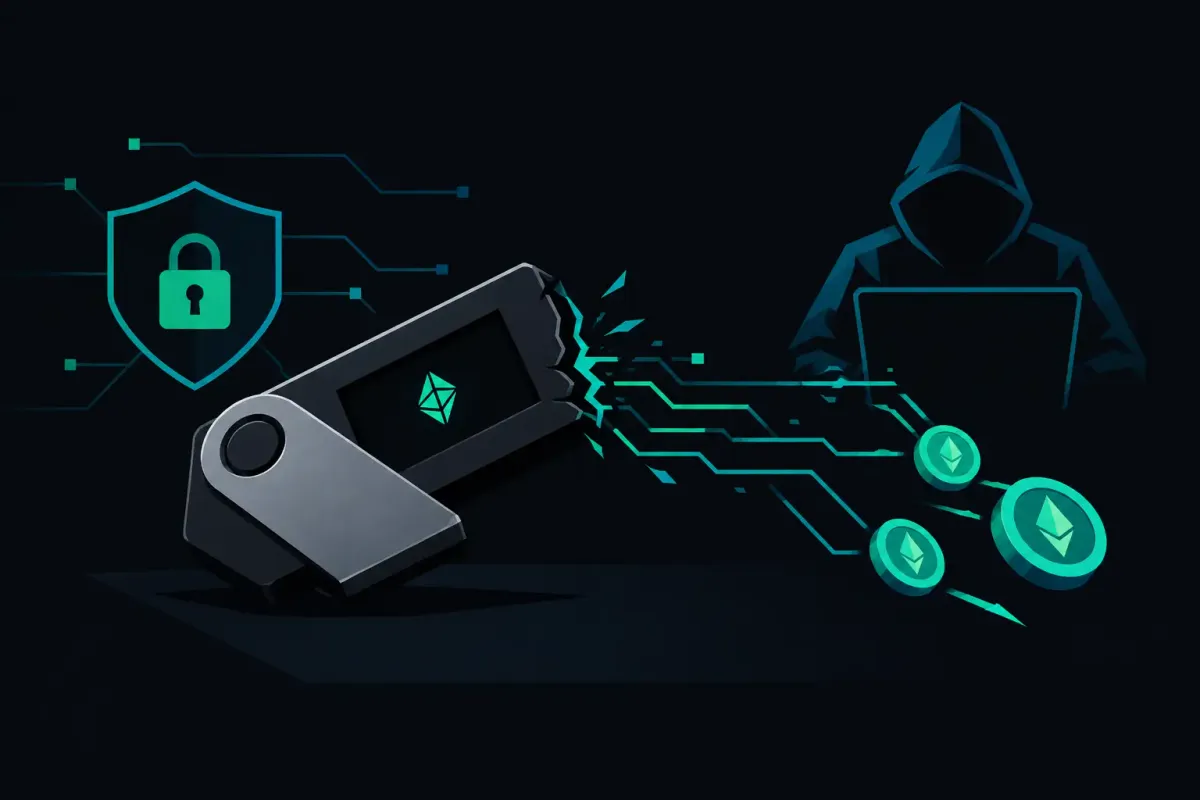
In late July 2026, a security notice went out to owners of a widely used Bitcoin hardware wallet: a firmware bug that had shipped since March 2021 had quietly weakened the randomness behind seed generation on some devices. Within days, an attacker began draining affected wallets. One traced sweep pulled roughly $70 million from over a thousand addresses in 41 minutes. By early August, an independent forensic trace of the theft put the total north of $116 million and climbing, drained across multiple confirmed waves, with a fourth wave suspected. This is one of the largest hardware wallet seed generation flaw incidents in Bitcoin's history, and it is worth understanding step by step, because the lesson applies to anyone holding a self-custodied payout address, including a solo miner's.
Step 1: Understand the Hardware Wallet Seed Generation Flaw Itself
The failure was not a hack of a company's servers and it was not a phishing scam. It was a weakness in how a piece of firmware generated the random numbers used to create a wallet's seed phrase in the first place. If the randomness behind a seed is not truly random, an attacker who understands the flaw can narrow down the possible seeds and reconstruct a private key without ever touching the physical device. That is what happened here: a subtle build flag in the firmware's random number routine, present for over five years before anyone caught it.
Step 2: Understand Why "Non-Custodial" Didn't Save These Users
This is the part worth sitting with. Every affected wallet was, by design, non-custodial. No exchange or company held these users' Bitcoin. The private keys never left the device. And it still didn't matter, because the flaw lived one layer deeper than custody: in the key generation itself. Non-custodial design removes counterparty risk, the risk that someone else holding your balance disappears, gets hacked, or goes bankrupt. It does not remove implementation risk, the risk that the tool generating or protecting your keys has a bug. Both matter. NexusPool's own non-custodial model works the same way for mining: the coinbase transaction in a found block pays a miner's own address directly, with nothing held on a pool's books, but that only protects the payout, not the security of the wallet controlling that address.
Step 3: Check Whether Your Own Setup Is Exposed
A build flag buried in a random number routine is not the kind of bug a typical user, or even a typical code review, is likely to catch. The device still generates a seed phrase that looks correct: the right word count, a valid checksum, a functioning wallet. Nothing about using it day to day signals that the entropy behind that seed is weaker than it should be. That is exactly why this class of flaw is dangerous and why it took over five years to surface: it fails silently, and the only way to catch it is an outside audit or, eventually, someone exploiting it at scale, which is what forced this one into the open.
So regardless of which hardware wallet or signing device you use, the questions to ask are the same. When was your seed phrase actually generated, and on what firmware version? Has that firmware had a security advisory since? Have you ever moved funds off that seed and back, which would mean the device's randomness got exercised more than once? None of this requires panic. It requires an actual answer, not an assumption that "non-custodial" was the whole security story.
Step 4: Verify Rather Than Trust Your Payout Address
This is where verification tools matter more than reputation. For Bitcoin, Litecoin, Dogecoin, and Bitcoin Cash payouts through NexusPool, the Payout Preflight tool reconstructs and checks a coinbase transaction byte for byte before a block is even found, so a miner isn't taking a payout address's correctness on faith once a win actually happens. That same instinct, check the mechanism instead of trusting the label, is what this wallet incident is really asking hardware wallet owners to apply to their own key generation.
Step 5: Move Funds If You Have Any Doubt
If you cannot confirm your seed was generated on unaffected firmware, the safest move is to generate a brand new seed on a device and firmware version you can verify, then migrate funds to a fresh address rather than continuing to use one you can't vouch for. For a mining payout address specifically, this is simpler than it sounds: because NexusPool never holds a balance for you to move, switching your miner's configuration to point at a new, verified address takes effect on the very next share, with nothing to withdraw or wait on.
What This Doesn't Claim
This post does not claim any specific hardware wallet brand is broadly unsafe, that switching mining pools changes your wallet security, or that solo mining odds are affected by any of this. They aren't. Odds are set by hashrate divided by network hashrate, nothing else, and identical for every miner on a given chain. This also isn't investment advice: nothing here promises a return, and nothing about a payout address matters if the funds behind it were never protected by real, verified randomness in the first place.
Check This First, In Order
Before anything else: confirm your seed's firmware version and generation date, confirm whether that firmware has an open advisory, and if you have any doubt at all, generate a fresh seed on verified firmware before moving another satoshi to your existing address. Everything else in this post is context for that one decision.
Trust nothing. Verify the device that generated your keys before you verify anything downstream of it.