Glass Ledger
A Mining Hosting Marketplace Was Breached. Here's What Solo Miners Are Actually Asking
A Bitcoin mining hardware and hosting marketplace disclosed an account breach in August 2026. The honest questions solo miners should actually be asking about it.
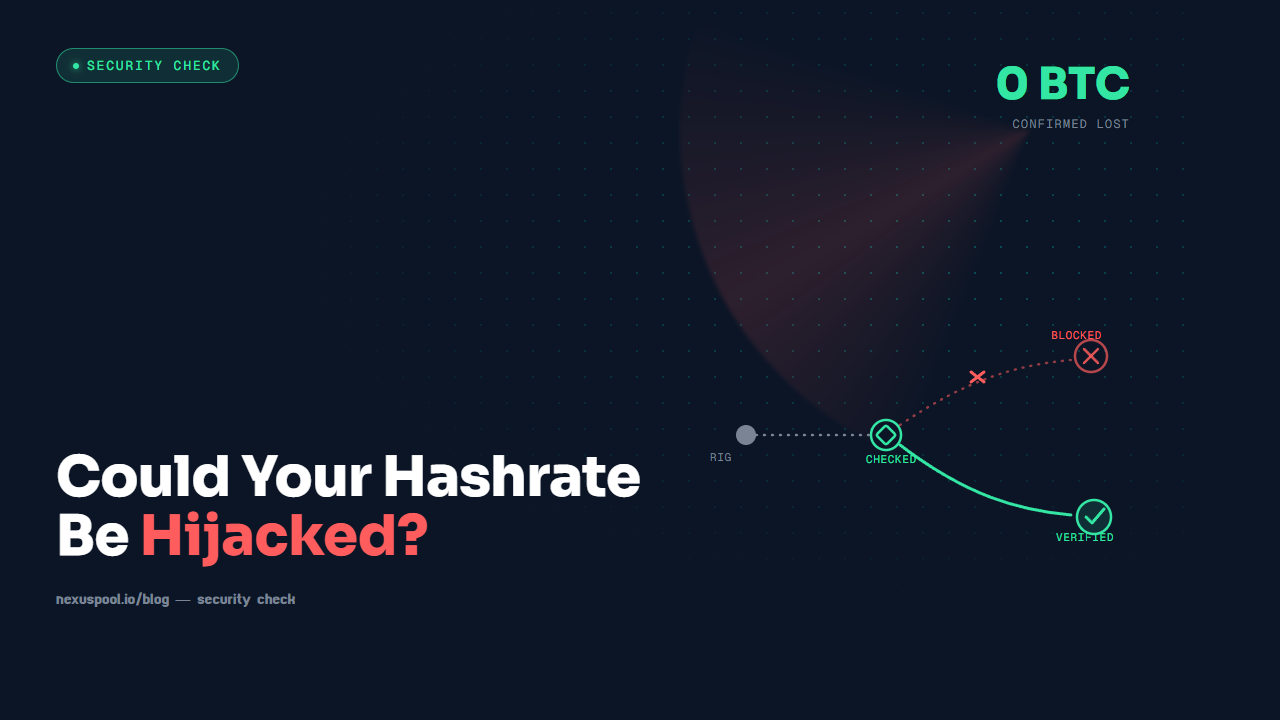
In mid-August 2026, a Bitcoin mining hardware and hosting marketplace disclosed that an unauthorized party had exploited a weakness in its authentication system, gaining access to a number of customer accounts and attempting to reset passwords, two-factor settings, and backup codes without authorization. The company's own incident report is detailed and specific about what was and was not exposed, which makes it a genuinely useful case study rather than a vague scare headline. Here are the questions worth actually answering, in the order a skeptical reader would ask them.
Was Any Bitcoin Actually Stolen?
No, according to the company's technical review. The unauthorized party accessed account emails and invoice or transaction history, including payment amounts and dates. Attempts to access wallet-related functions returned no data, and no payment card, bank, or stored payment credentials were exposed. This was an account-access breach, not a funds breach, and the distinction matters for everything that follows.
The company's own writeup traces the root cause to a weakness in the authentication system supporting the marketplace itself, the layer that verifies who is allowed to log in and change account settings, rather than any weakness in a wallet, a private key, or the mining protocol the hardware speaks. That distinction is worth sitting with, because it means the failure sat in ordinary web-application security, password resets, two-factor settings, backup codes, the same category of bug that could affect almost any account-based service, mining-related or not.
Could the Attacker Have Redirected Where a Miner's Hashrate Was Pointed?
They tried. The company's report describes the unauthorized party removing the mining pool setting stored on affected accounts and attempting to set their own pool as the new default in the marketplace dashboard. That is a real and different kind of attack from a wallet drain: instead of stealing existing funds already earned, it aims to capture future work going forward by rerouting where a machine's hash output actually gets credited from that point on.
Did That Redirect Actually Reach Any Customer's Hardware?
No. The company states that a pool change made in the marketplace dashboard has to pass a separate validation step before it takes effect on the physical machine, and that process caught and blocked the attempted change before it reached any customer's hardware. The account layer and the machine-configuration layer were not the same trust boundary, and that separation is what stopped this specific attempt from mattering operationally.
If a Redirect Like That HAD Gone Through, What Would It Actually Cost You?
Not your existing Bitcoin. It would cost you future work: for however long a redirect stood, any block your hardware happened to find would pay the coinbase reward to the attacker's own pool and address instead of yours, since payout destination is set by whichever pool a miner is actually pointed at. That is a real, distinct risk worth understanding on its own terms, separate from the custody question entirely.
Does a Non-Custodial Pool Design Protect You From This Specific Attack?
Honestly, not directly. A non-custodial design like how NexusPool's Stratum connection actually works removes the risk of a pool holding an earned balance you'd need to withdraw, since the coinbase transaction pays a miner's own address directly. But that protects the payout mechanism, not the separate question of who controls the dashboard or account layer deciding where a physical machine points its hashrate in the first place. A custodial and a non-custodial pool are equally exposed to that particular account-security question, since it lives one layer above the pool's own payout design.
What Should You Actually Check After Reading This?
A short list, and none of it requires new hardware. Confirm the pool address configured in your own miner's software is actually the one you expect, the same skepticism worth applying to any setting you didn't personally verify recently. Treat any hosting or marketplace account tied to mining hardware the way you'd treat any account holding financial history: a unique password, two-factor authentication through an app rather than SMS where the option exists, and no credential reuse across sites, since a password breached on one unrelated service is exactly what lets an attacker try the same credentials against a mining account. If a hosting provider or marketplace ever discloses an incident, read the actual technical writeup rather than the headline; the specific claims about what was and was not accessed are usually more precise, and more reassuring or more concerning, than a summary conveys. Neither of these steps claims mining a block becomes more likely, and neither is investment advice; they are account hygiene, which is a different problem than solo mining odds and deserves its own separate attention.
No coins were stolen in this incident. What actually happened was an attempted redirect of future work that a separate validation layer caught before it reached any hardware, and the honest lesson is that checking where your own hashrate points deserves the same skepticism as checking a payout address before trusting it, exactly what the same kind of check Payout Preflight runs on a payout address is built to make routine instead of optional.
Trust nothing. Verify where your own miner is actually pointed before assuming it is where you left it.