Glass Ledger
A Mining Pool's Bankruptcy Filing Exposes a Custody Myth
A once-major Bitcoin mining pool operator filed for Chapter 11 in July 2026. The myth that filing exposes about what a safe balance actually means.
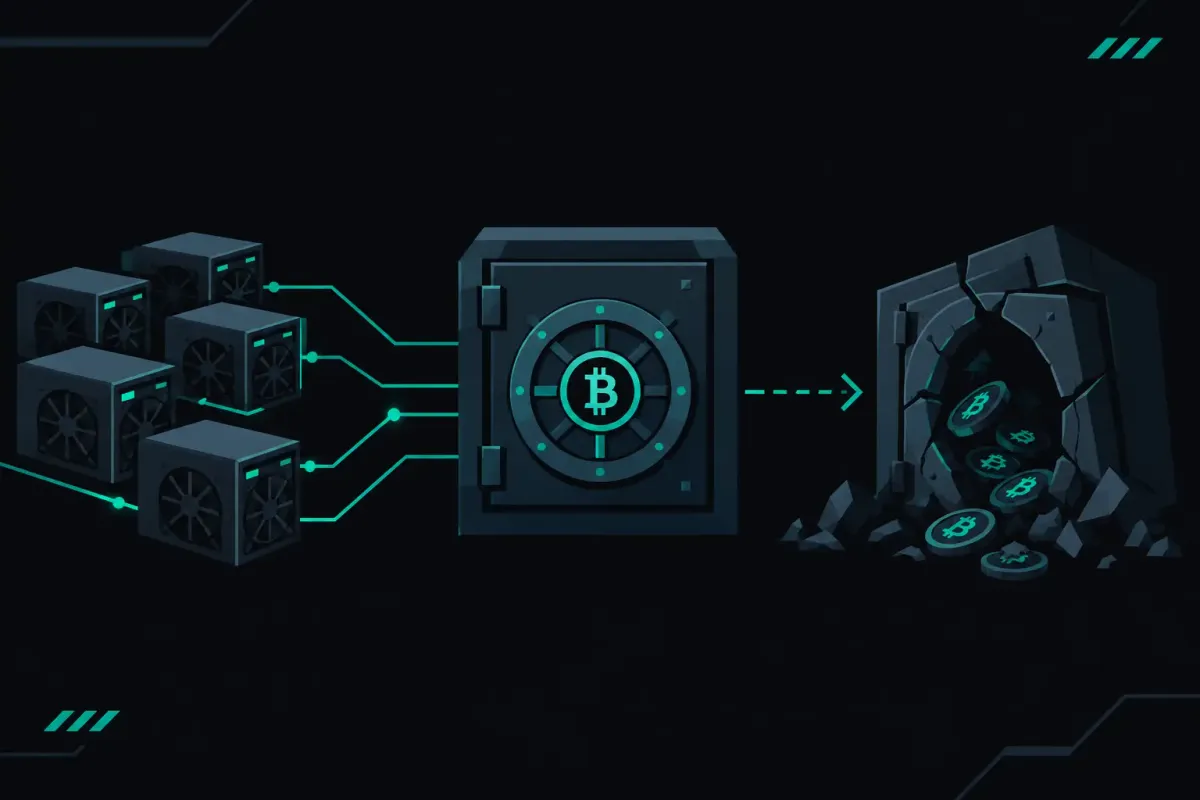
On July 22, 2026, a mining pool operator that had once ranked among the largest in the world by hash share filed for Chapter 11 bankruptcy protection, listing roughly $173 million in debts. Reporting on the filing traced the decline back to a 2022 liquidity crisis the operator never fully recovered from, with its share of global hashrate shrinking for years before the filing finally arrived. For anyone who has ever left an earned mining balance sitting inside a pool's own accounting system, this kind of mining pool bankruptcy custody risk is exactly the scenario worth examining honestly, because it exposes a myth a lot of miners carry without ever testing it.
The Myth: "As Long As a Pool Isn't Hacked, My Balance Is Safe"
Most conversations about mining pool risk focus on hacks: a breach, a stolen hot wallet key, an attacker draining a pool's balances overnight. That is a real risk, and it has happened to pool operators before. But it leads a lot of miners to a false conclusion: that if a pool has a clean security record, an earned balance sitting inside it is safe. It isn't, not fully, because a hack is only one way a custodial balance can turn into a loss.
The Reality: Mining Pool Bankruptcy Custody Risk Doesn't Require a Hack
When a pool holds your earned balance instead of paying it to your own address immediately, what you actually have is an entry in that company's internal ledger, backed by a promise to pay it out later. That promise is only as good as the company behind it. If the company becomes insolvent, as happened here, your balance doesn't disappear from a ledger through theft, it becomes an unsecured claim competing with every other creditor in a bankruptcy proceeding, with no guarantee of full recovery or a fast timeline. No hack has to occur for a custodial balance to be at risk. The company simply has to run out of money.
The specific operator in this filing had been losing hashrate share for years before the bankruptcy became public, tracing back to a liquidity crisis in 2022 that it never fully recovered from. That is worth noticing because it means the warning signs were visible well before the filing itself, for anyone watching hash share and reputation rather than only watching for a breach headline. A shrinking, financially strained operator can keep paying out balances for a long time right up until it can't, and the transition from "still paying" to "in bankruptcy court" can happen faster than a miner has time to react to.
This dynamic is not specific to Bitcoin. The same custodial structure exists on any chain a pool operates, whether that pool is mining Bitcoin's SHA-256 chain, Litecoin or Dogecoin through Scrypt and AuxPoW merged mining, or Bitcoin Cash. A custodial balance sitting on any of those chains carries the identical insolvency exposure described above, because the risk lives in the accounting relationship, not in the specific proof-of-work algorithm underneath it.
| Failure mode | What happens to a custodial balance | What happens to a non-custodial payout |
|---|---|---|
| Hack or breach of the pool | Balance may be partially or fully drained by the attacker | Nothing to drain, because the pool never held it |
| Insolvency or bankruptcy filing | Balance becomes an unsecured creditor claim, subject to court process | Not applicable, funds already sit at the miner's own address |
| Abrupt shutdown or policy change | Miner must react quickly to withdraw or redirect hashrate | Nothing to withdraw, each found block already paid out directly |
What a Non-Custodial Model Removes From This Picture
A non-custodial pool doesn't make a miner's odds better, and it doesn't prevent a pool operator from having a bad year. What it removes is the specific dependency shown in that table: the miner's earned reward never becomes a balance sitting in someone else's accounting system in the first place. On NexusPool, the coinbase transaction embedded in a found block pays a miner's own address directly, for Bitcoin, Litecoin and Dogecoin through AuxPoW merged mining, and Bitcoin Cash, at 0% pool fee, with the technology behind that payout laid out in detail and each transaction independently checkable before a block is even found rather than taken on faith after the fact. The signed, offline-checkable receipts behind that system are what NexusPool calls its Glass Ledger.
What This Doesn't Claim
This post does not claim a non-custodial structure prevents a pool operator from shutting down, having technical problems, or making bad decisions, only that it removes one specific failure mode: your Bitcoin becoming someone else's balance sheet entry. It doesn't improve solo mining odds, which remain set by hashrate divided by network hashrate alone, identical for every miner on a chain. It also isn't investment advice, and mining a block is not a guaranteed outcome for anyone. Full terms are available for anyone evaluating this for themselves.
The reality, in short: a clean security record tells you a pool hasn't been hacked. It tells you nothing about whether the company behind it will still exist, and still be solvent, the day it owes you a payout.
Trust nothing. Verify who actually holds your balance before a bankruptcy filing forces the question for you.