NexusPool
Mining Transparency Means Proof Before Trust
Mining transparency means checking custody, share records, and block handling before you point a miner at a pool. Here is how proof looks in practice.
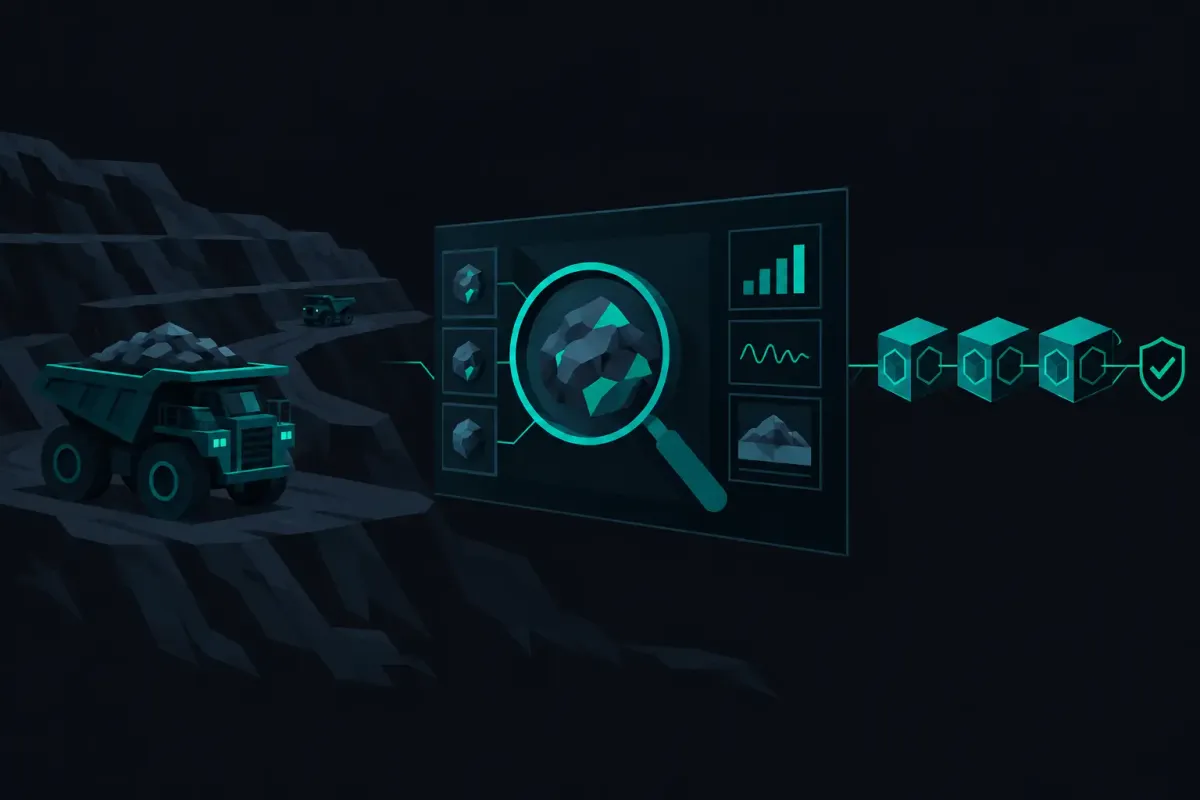
A miner can send valid work for hours and still have no direct view of what happens between a submitted share and a possible block reward. Mining transparency closes parts of that gap with evidence. It does not ask you to trust a dashboard, a fee table, or a reassuring sentence.
For a solo miner, the central question is simple. If your hardware finds a valid block, where does the money go? The answer should be visible before the block exists. It should not depend on an account balance, a manual withdrawal, or an operator deciding what happens next.
That is the standard worth using. A pool is communications infrastructure between your miner and the Bitcoin network. It handles jobs, receives shares, and may submit a found block. It should be able to show how it performs each of those actions. If it cannot, the honest answer is that you are relying on trust.
What mining transparency actually covers
Mining transparency is not one feature. It is a chain of claims. Each claim needs evidence that matches its scope.
The first claim is custody. A miner should know which Bitcoin address receives the coinbase reward if a block is found. With a non-custodial solo setup, that address is the miner's address. The block subsidy and transaction fees are paid on-chain to that address. There is no pool-held balance to request later.
Seeing the destination in advance matters. A reward address shown only after a win is not useful evidence before the event. A miner should be able to inspect the proposed reward output while work is being assigned. That output is a concrete fact. It can be checked against the address the miner intended to use.
The second claim is share accounting. A share is not a Bitcoin block. It is proof that your miner completed work meeting the pool's assigned target. For a solo miner, shares do not create a proportional payout. They show that the connection is active and that the pool is receiving work from the address it identifies as yours.
A signed receipt can make that accounting harder to rewrite quietly. NexusPool signs an hourly custody receipt for every address from which it counts shares. The exact bytes covered by the signature are published. A miner can check those bytes against the pool's published key instead of treating a web page as proof.
That signature has a clear limit. It proves that the holder of the signing key signed a specific receipt. It does not prove, by itself, that every field in the receipt is true. Cryptography can prove authorship and detect changes. It cannot turn an unverified input into a fact. This distinction is where honest transparency starts.
The third claim is job and share handling. When a miner submits a share, an accepted response tells it the share met the assigned target. A rejected response should include a reason. “Stale,” “low difficulty,” and malformed submissions are different conditions. Treating them as one generic failure hides useful information.
A rejection reason does not solve every problem. Network delay, a job change, a local miner fault, and an invalid configuration can still require diagnosis. It does give the miner a place to begin. The pool is stating what it saw at the protocol boundary, not asking the miner to infer it from a red status light.
The final claim is block handling. A valid block is rare at small hashrates. That rarity is exactly why the path for a winning block should be defined before one appears. The pool needs to record the event, construct and submit the block, and handle a failed submission path without losing the record.
At NexusPool, a found block is written to the pool's own journal on disk before it is submitted. It is then submitted to Bitcoin nodes across multiple regions with automatic retries. The journal records that the pool observed a candidate. It is not network confirmation. Bitcoin confirmation comes only when the network accepts the block and later blocks build on it.
Mining transparency does not change the odds
Transparency changes what you can inspect. It does not change Bitcoin's difficulty or make a small miner more likely to find a block.
Your odds of finding a block depend on your hashrate relative to network difficulty. Those odds are high variance for home miners and small fleets. A Bitaxe can run for a long time without finding a block. A valid block can also arrive sooner than any average would suggest. Neither outcome proves that the connection is good or bad.
This is why a pool should not turn a probability into a promise. A dashboard can show shares, current work, and the configured reward address. None of those facts predict when a block will arrive. A custody model also does not change the underlying probability. It determines who controls the reward if the improbable event occurs.
The same boundary applies to geography. A nearby server can reduce round-trip time for work updates and share responses. It cannot improve your mathematical chance of solving a block. NexusPool operates independent Bitcoin-node regions in Los Angeles, Chicago, Frankfurt, and Singapore. Your connection can steer toward a healthy region that is closer to you. Distance still matters for latency. Network difficulty still sets the odds.
What to check before connecting a miner
Start with the payout address. Generate or select an address you control. Confirm the address format is valid for the chain you intend to mine. Then verify that the pool presents that same destination for a potential reward before any block is found.
Next, check the connection method your hardware supports. Many home miners and standard ASICs use Stratum V1. Some newer setups can use native encrypted Stratum V2. Supporting both on the same port removes one easy source of configuration mistakes. It does not make an older miner speak a protocol it does not implement.
After the miner connects, watch the basic exchange. Does it receive jobs? Do shares receive accepted or rejected responses? If shares are rejected, is a reason returned? A connection that appears alive but provides no usable protocol feedback leaves you guessing.
Then inspect the receipt model. A useful receipt identifies the address, the period it covers, and the fields included in the signed message. The verification material must include the public key and the exact message bytes or an unambiguous encoding rule. A claim that a receipt is “signed” without those details is incomplete.
Technical miners should also distinguish transport security from accounting evidence. Encrypted Stratum V2 protects the connection against certain network-level interference when it is correctly configured and the authority key is pinned. An hourly signature protects the integrity of a published receipt after the fact. A coinbase output controls where a successful block reward is paid. These are separate controls for separate failures.
Proof has a useful failure mode
The best transparency systems do not merely provide good news. They leave evidence when something goes wrong.
A share rejection reason can expose a stale job. A signed receipt can reveal that a published record changed after signing. A visible coinbase destination can expose an address mismatch before a miner finds anything. A journaled block event can preserve a local record before network submission begins.
Each artifact has limits. A rejected-share message does not prove why your internet path delayed a job. A receipt does not guarantee that your miner was configured with the intended address before it connected. A block journal does not force the Bitcoin network to accept an invalid candidate. Evidence is still better than reassurance because it gives the miner a specific claim to test.
That is the point of mining transparency. The pool does not become trustworthy because it says the right words. It becomes more accountable when its behavior produces records that can be checked, when the scope of those records is stated plainly, and when the reward path remains under the miner's control.
Trust nothing. Verify the reward address, the signed receipt, and the block path.