Stratum translator
Stratum Translator Versus Native Connections
Stratum translator versus native connections explains what your miner sends, where encryption ends, and how to choose the right setup before mining.
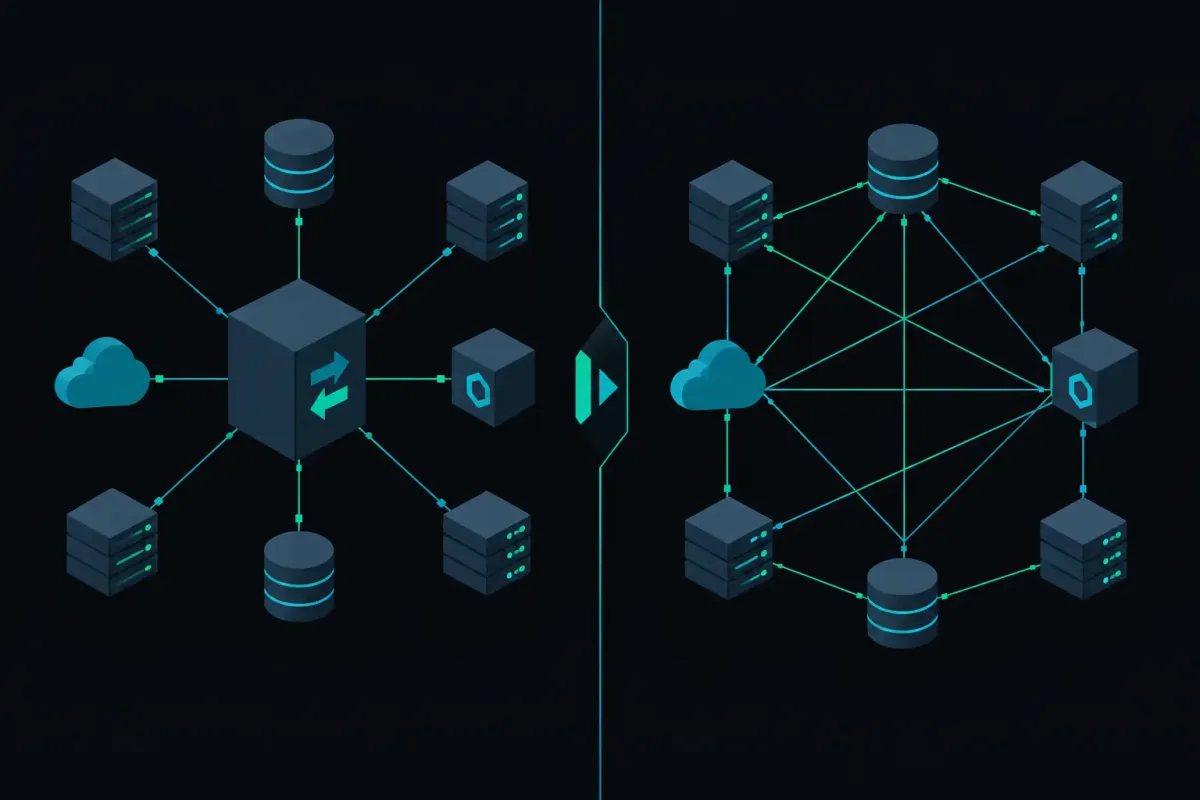
A Stratum translator versus native connections decision is usually made by the firmware your rig already has. Most home miners speak Stratum V1. Some newer firmware can speak Stratum V2. The difference is not cosmetic. It determines where your connection is encrypted, which machine interprets your shares, and what you need to keep running.
For a home miner, the practical question is simple: can the rig connect directly to the pool endpoint with the protocol it speaks? If it can, use that path. If it cannot, a translator can bridge the gap. The bridge has limits worth understanding before you put it between a rig and a pool.
What a native connection means
A native connection means the miner and the pool speak the same mining protocol directly. A Stratum V1 miner makes a Stratum V1 connection to a pool. A Stratum V2 miner makes a Stratum V2 connection to a pool. There is no separate machine converting messages in the middle.
Native does not always mean encrypted. Standard Stratum V1 is an older protocol and is commonly carried as plain TCP. A miner can still connect directly and work normally this way, but the connection does not get Stratum V2's encrypted transport merely because the pool also supports V2.
A native Stratum V2 connection is different. The rig and pool establish an encrypted Noise session. The miner can also pin the pool's Stratum V2 authority key. Pinning gives the miner a specific public key to expect during setup. It is a check on who is authorized to provide work under that identity.
This matters most when your firmware supports V2 itself. The miner verifies the connection at the point where work arrives and shares leave. There is no local service translating one protocol into another.
What a Stratum translator does
A Stratum translator is a proxy. Your miner connects to the translator in one protocol, usually Stratum V1. The translator connects onward to the pool in another protocol, often Stratum V2. It converts jobs, submissions, and control messages between the two.
That can be useful. A V1-only ASIC can use a V2 upstream connection without replacing its controller firmware. A small farm can place a translator on its local network and keep older rigs on their existing V1 settings. The translator becomes the protocol-speaking client from the pool's perspective, while each rig remains a V1 client from the translator's perspective.
It also adds a machine to operate. That machine needs power, networking, software updates, storage if its setup requires it, and monitoring. If it stops, the rigs behind it lose their upstream path even though their fans and hash boards continue running.
A translator is not a V2 upgrade for the whole path. It can encrypt the translator-to-pool leg. It does not encrypt a plain Stratum V1 rig-to-translator leg. If the translator sits on the same private LAN as the miners, that unencrypted segment is short. It is still a separate segment with its own network exposure.
The translator reads and rewrites messages
Translation is not just forwarding packets. Stratum V1 and Stratum V2 organize mining work differently. The translator has to interpret a V1 job, map it to its upstream state, and turn a V1 share submission into the upstream form the pool expects.
That means the translator is part of the share path. A bad configuration can point workers at the wrong local address. A resource-starved device can add delay. A software defect can misread an edge case. These are ordinary operational risks, not a reason to avoid translators categorically.
The right conclusion is narrower: use one when it solves a real compatibility problem, and treat it as mining infrastructure rather than an invisible adapter.
Direct V1, translated V1, and native V2
There are three connection layouts that often get grouped together even though they do different things.
With direct V1, a V1 rig talks straight to the pool. It is the fewest moving parts. For many home miners, that is the whole decision. Enter the endpoint, use your Bitcoin address as the mining identity, and confirm the rig receives work and reports accepted shares.
With translated V1, the rig talks V1 locally, and a translator talks V2 upstream. This layout is useful when you want V2 on the wide-area leg but the miner firmware cannot make a V2 connection. It requires you to check both legs. The rig must reach the translator. The translator must reach the pool. A green status page on one machine does not prove the other path is healthy.
With native V2, the rig itself establishes the encrypted session. This is the cleanest design when your device and firmware support it. It avoids a translation layer. It does not remove the need to inspect rejected shares, stale work, or network delay. It simply places protocol handling where it belongs: in the miner and at the pool.
For most ESP32-class home miners, firmware support decides the answer. Do not buy a separate computer to run a translator just because V2 exists. First check whether your current firmware supports native V2, whether it supports V1 only, and whether you have a reason to operate another service.
What does not change
Neither connection method changes the odds of finding a Bitcoin block. Network difficulty and your hashrate set those odds, the same at every pool. Solo mining is a lottery. An expected wait is an average over a very large number of trials, not a schedule for your rig.
A connection path can still matter after the odds are set. When a new block arrives, miners need new work. When a rig finds a valid share, the pool needs to read it correctly. When a winning share appears, the found block needs to reach the Bitcoin network. These are path and handling questions, not luck questions.
Latency is one part of that path. A miner far from its available server regions has a longer round trip. That can delay new work and share status. It does not make the miner more or less likely to find a block on any given hash.
A translator adds local processing to the path. Usually, a properly sized machine on a local network can handle that work without drama. Usually is not a measurement. If the difference matters to your setup, time it from your network. Watch job arrival after a block change, share response behavior, and the translator's CPU and memory under load.
How to choose without guessing
Start with the rig, not with a protocol preference. Read the firmware's connection settings. If it offers only a Stratum V1 URL, use a direct V1 connection unless you have a clear reason to run a translator. If it offers native Stratum V2 with authority-key pinning, native V2 is the more direct path.
A translator makes sense when you operate several V1-only machines and want one managed V2 upstream connection. It can also make sense when you enjoy running your own local services and can diagnose DNS, ports, logs, and restarts. That is a valid hobby. It is not a requirement for solo mining.
For a small farm, separate the questions. Do you need V2 upstream? Do you have V1-only controllers? Can one local machine be monitored as carefully as the miners behind it? If the answer to the last question is no, direct connections may be the safer operational choice even if a translator is technically possible.
Keep the payout path separate from the connection choice. A translator does not hold a block reward by itself. But you should still know where a found block pays before mining. At NexusPool (nexuspool.io), a Bitcoin miner connects at solo.nexuspool.io:3350 with a Bitcoin address. The same port accepts Stratum V1 and encrypted Stratum V2. Payout Preflight builds the current block's payout for that address before a rig finds anything.
That is a useful check because it concerns the result, not a protocol label. If your rig finds a block, inspect the proposed transaction output and confirm the reward destination is your address.
Check the path you actually run
A native connection has fewer places to inspect. A translated connection has more control over the upstream protocol, but more pieces that can fail or be misconfigured. Neither label tells you whether your rig is receiving current work or whether its shares are being handled correctly.
Use the path your hardware can support and you can observe. For direct V1, check the rig's accepted and rejected share reasons. For a translator, check those reasons plus the translator's upstream session and local resource use. For native V2, confirm the authority key you pin is the published key and that the firmware reports an encrypted session.
Then check the thing that matters if the lottery ticket wins: where the block reward goes. Trust nothing. Verify your payout before you mine.