Cloud Contracts
Cloud Contracts Versus ASIC Ownership Explained
Cloud contracts versus ASIC ownership changes who controls the machine, power costs, uptime claims, and the Bitcoin rewards your hashrate may earn, if any.
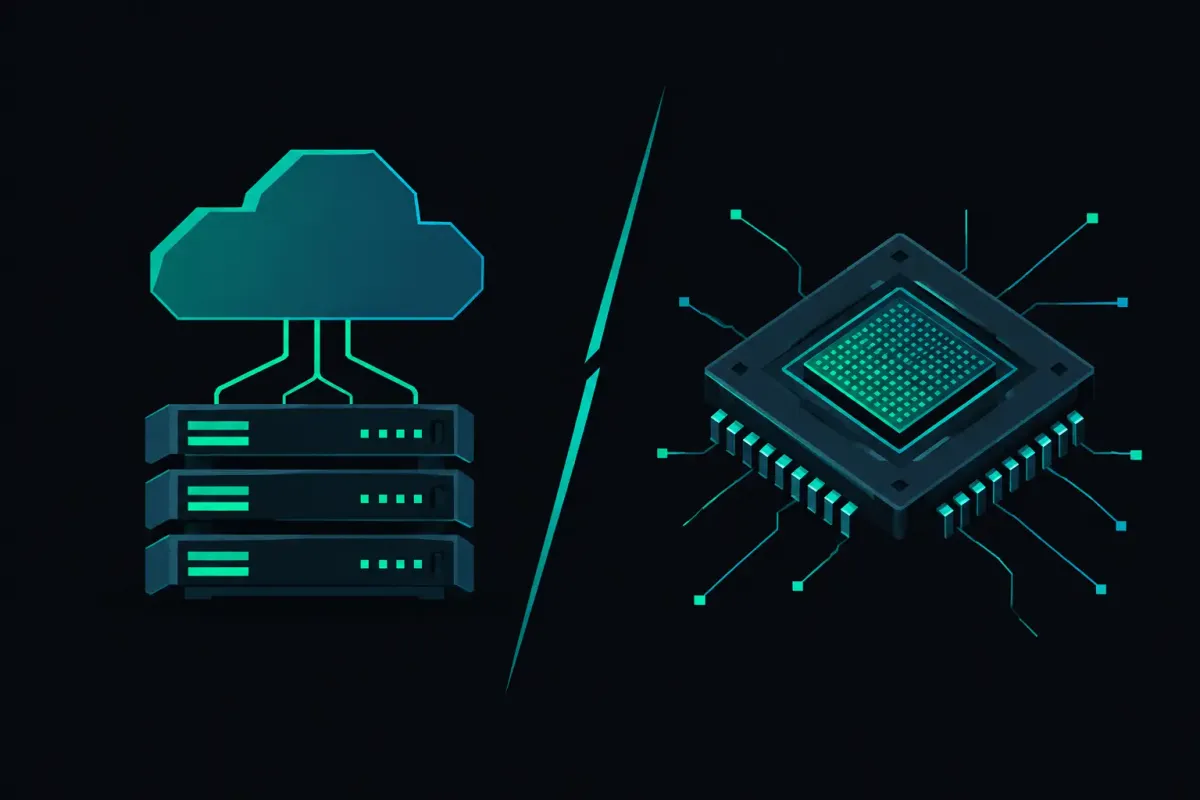
A cloud contract can show a number of terahashes without showing you the machine that produces them. That is the real question in cloud contracts versus ASIC ownership. You are not only choosing where hashrate runs. You are choosing who controls the hardware, the operating terms, the evidence, and the path by which a mining reward reaches you.
For a home miner, an ASIC is tangible. It has a serial number, a power draw, a fan curve, and a noise problem that may become a household discussion. A cloud contract replaces those facts with an agreement. That agreement may be workable. It also becomes the thing you must inspect.
Bitcoin mining remains high variance. Hashrate does not create a scheduled return. Network difficulty sets the probability of finding a block for a given hashrate. That probability is the same regardless of whether the machine sits in your garage, a hosting facility, or an undisclosed location under a cloud contract.
What You Actually Own
ASIC ownership means you hold the machine or have a direct claim on a specific machine under a hosting arrangement. You decide whether to run it, sell it, repair it, underclock it, shut it down, or point it at a different Stratum endpoint. Your choices can still be limited by electricity, noise, heat, local rules, and the machine's condition. But the hardware is an asset you can inspect and move.
A cloud contract generally gives you a contractual right to a stated amount of hashrate for a stated period. It does not necessarily give you title to an identifiable ASIC. You may not know the model, firmware, location, efficiency, uptime history, maintenance state, or whether the stated hashrate is backed by currently operating equipment.
That distinction matters when conditions change. An owned ASIC may lose resale value or become less efficient than newer hardware. A contract may have no resale value at all. An owned machine may fail. A contract provider may change terms if the agreement permits it, suspend service under a force majeure clause, or cease operating altogether.
Neither structure removes risk. They place risk in different hands.
Cloud Contracts Versus ASIC Ownership: Follow Control
The simplest test is control. Ask who can make each decision, and what proof exists when they do.
With an ASIC in your possession, you control the firmware you run, the pool endpoint you use, the payout address you configure, and when the machine stops. A home setup has physical constraints. You pay for electricity. You deal with heat and noise. You may need a dedicated circuit. Those are not minor details. They are the visible cost of direct control.
With a cloud contract, the operator controls the site, electricity supply, repairs, machine selection, and usually the mining configuration. Your control comes from contract language and whatever reporting the operator provides. A dashboard can be useful, but it is reporting. It is not proof by itself that specific hardware is running for your benefit.
Read the contract as if the dashboard disappears tomorrow. Determine whether it identifies the hardware, the term, the maintenance fees, the power price, the payout calculation, and the conditions for suspension or termination. Determine whether the provider can alter those terms after you have paid.
A contract that says it can end when mining is no longer economically viable needs a definition of economically viable. Whose costs count? Who calculates them? Can you inspect the inputs? A vague answer is not a minor legal detail. It is the operating rule for your hashrate.
Cost Is More Than the Purchase Price
An ASIC purchase is easy to see. The harder calculation includes power, cooling, electrical work, replacement fans, repairs, downtime, shipping, and the possibility that the unit becomes obsolete. A machine drawing 3,000 watts continuously uses 72 kilowatt-hours in 24 hours. Your actual electricity rate determines what that costs. Your meter settles that question better than an estimate does.
Cloud contracts often appear simpler because some costs are bundled. Bundling does not make costs disappear. It can make their source harder to inspect. A maintenance deduction may cover power, hosting, operations, or a formula defined only by the provider. Fixed fees can be easier to model. Variable fees can be fairer when conditions move. Either way, the exact calculation should be available before you commit funds.
Do not treat a quoted daily mining amount as a stable output. Bitcoin's difficulty can change. Transaction fees vary. A block reward is not a wage. If the arrangement converts mined bitcoin into a daily balance, ask what happens between the underlying hashrate and that number.
For direct solo mining, the variance is even more obvious. A small machine can submit valid shares for a long time without finding a block. That outcome is normal. A pool does not change the network's difficulty or improve the machine's probability of finding a block. Its job is to route work, record shares, and handle a winning block correctly if one arrives.
Verify the Reward Path
The most consequential question is not how polished a mining interface looks. It is where a reward lands and who can redirect it.
A cloud contract may credit an internal account balance before allowing withdrawal. That creates a custody layer. You need to know the withdrawal minimum, processing rules, supported addresses, identity requirements, fees, and what happens if the service pauses withdrawals. If the operator has custody of the balance, the operator controls the release of that balance.
ASIC ownership lets you configure an address at the mining endpoint. That does not automatically make every arrangement non-custodial. You still need to inspect how rewards are handled by the infrastructure you choose. The cleanest design exposes the payout destination before any reward exists and sends a found block's subsidy and transaction fees directly to that address on-chain.
NexusPool follows that model for solo and lottery mining. A miner connects with a valid payout address and receives any found Bitcoin block reward directly to that address on-chain. The pool charges a 0% pool fee. This does not alter block-finding odds. It defines custody and the reward path.
For a technical check, do not stop at a statement that shares are counted. Ask what records prove the pool observed work from your address. NexusPool signs an hourly custody receipt for each address it counts shares from and publishes the exact bytes covered by the signature. A miner can check the signature against the published key. That verifies a narrow claim: the pool signed that specified receipt. It does not predict future rewards or prove that a block will be found.
The scope matters. Proof is useful when it says exactly what it proves.
When Cloud Mining Can Be Rational
Cloud mining is not automatically irrational. It can fit someone who cannot run high-power equipment due to apartment rules, electrical limits, heat, noise, or lack of time for repairs. It can also give a miner a defined exposure period without buying and later selling hardware.
That convenience has a price beyond the contract fee. You accept counterparty risk. You may accept opaque hardware allocation. You may have less ability to independently verify power usage, uptime, and the destination of mined rewards. Whether that trade is acceptable depends on the contract and your tolerance for trusting the operator.
ASIC ownership can also be impractical. A machine that cannot run reliably at your available power rate is not made economical by the fact that you own it. A low-power open-source miner may be better suited to learning, experimentation, and a home lottery setup than to a plan built around predictable income. It is still real mining. It is not a promise of a return.
Questions Before You Commit
Before buying a contract or an ASIC, write down the answers. What exact hashrate is being delivered or what exact model are you buying? Who pays for power, repairs, and downtime? Can the terms change? Where do rewards first appear? Can you set the payout address yourself? What records can you independently verify? What happens if the provider, host, or machine stops working?
If the answer to a material question is a graph, a slogan, or a support ticket promise, keep asking. Mining has enough unavoidable uncertainty. There is no reason to add uncertainty that a clear term, an on-chain payment, or a signed record could remove.
Buy the level of control you can actually operate. Then inspect every party that touches your hashrate or your rewards. Trust nothing. Verify the terms that govern your hashrate.