Glass Ledger
The Hobbyist Miner's Dual-Pool BCH Setup, Explained
The Hobbyist Miner just solo-mined Bitcoin Cash live on a dual-pool home rig. Here's exactly how the NexusPool side of that setup works.
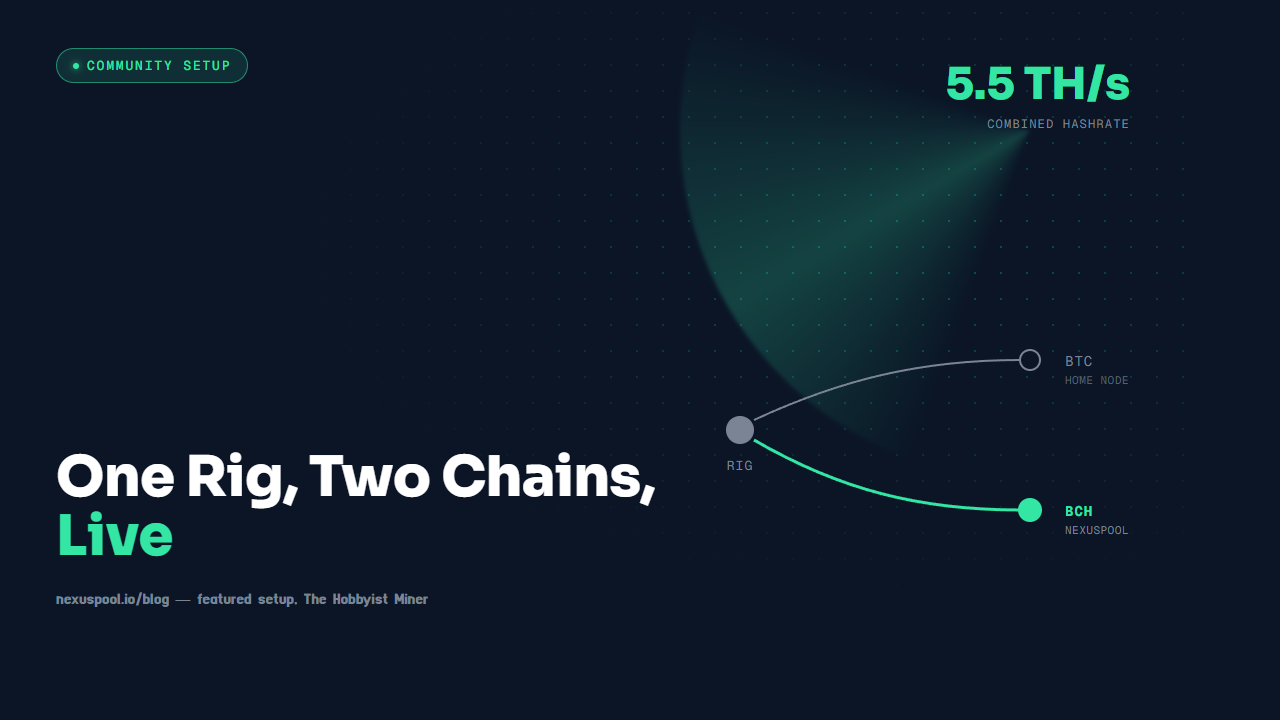
The Hobbyist Miner, a mining hardware review channel with about 173,000 subscribers, published a video today unboxing a new dual-pool home miner and, about eleven and a half minutes in, solo-mining Bitcoin Cash live through NexusPool while its own Bitcoin side stayed on the host's home node. That's a real, specific thing to happen on camera, so here's exactly what the video showed and what it means if you want to set up the same thing yourself.
What the Video Actually Showed
The full video covers a new home miner called the Bitsfortun BS1, sent to the channel by Helium Deploy, which pulls about 5.5 TH/s combined while drawing roughly 95 watts. What makes it worth a NexusPool post isn't the hardware itself. It's the feature the host highlighted: dual-pool mining, splitting one machine's hashrate between two different chains at once instead of picking one.
Around the 11:29 mark, the video walks through setting that up. Most dual-pool-capable devices actually only support failover, mining one chain and switching to a second only if the first pool goes unreachable, not splitting hashrate between both at the same time. The BS1 does the split, with a slider the host adjusted live to move hashrate between chains rather than picking one. The host already runs his own Bitcoin node and pool at home, so BTC stayed there. Bitcoin Cash was a different story: no BCH node of his own, so that side of the split went to NexusPool instead. Watching the setup happen live, the host noted that NexusPool's connection flow picked up the miner's own brand and chip automatically instead of asking him to enter it by hand, a small detail that only shows up when someone who wasn't told what to expect actually runs the wizard on camera.
The Two Things the Video Didn't Get To
A fifteen-minute unboxing video can't cover everything, and two real parts of what NexusPool does never made it in. Both are worth explaining properly here.
The first is Payout Preflight. Before a solo miner ever finds a block, this tool reconstructs the exact coinbase transaction that block would contain and checks, byte for byte, that it pays the address actually configured, not a typo, not a stale wallet, not a pool balance sitting in between. It's the difference between finding out your setup was wrong the moment it would have mattered most and finding out ahead of time when it costs nothing to fix.
The second is what Glass Ledger actually is under the slogan. It's not a marketing phrase, it's a signed, offline-checkable receipt for the work a miner's hardware did, using the same signature scheme (Schnorr, the one BIP340 standardized for Bitcoin itself) that secures transactions on the chain being mined. A miner doesn't have to trust a dashboard number. They can check the receipt against the cryptography directly.
Neither tool changes the odds of finding a block. Nothing does. That's set entirely by a miner's own hashrate divided by the network's total hashrate, identical for every miner on a given chain regardless of which pool, if any, relays their shares. What both tools change is whether a miner has to take the pool's word for the parts that happen before and after that lottery draw.
Why Solo Mine Bitcoin Cash at Home
The setup in the video is a genuinely common situation, not an edge case built for a demo. Plenty of home miners who already run their own Bitcoin node have never bothered standing up a second one for Bitcoin Cash, since BCH's own network is smaller and the tooling around running a full node for it is less mainstream than Bitcoin's own. Running a second full node just to solo mine a second chain is a real cost in disk space, bandwidth, and maintenance that most hobbyists reasonably skip. NexusPool's Bitcoin Cash support exists for exactly that gap: the same non-custodial structure as the BTC side, coinbase paying the miner's address directly, native Stratum V1 so an already-configured device connects without a firmware change, for a chain a hobbyist might not want to run their own infrastructure for. A dual-pool device like the one in the video means neither half of a miner's hashrate sits idle just because its owner only wanted to maintain one node.
What This Doesn't Change
Solo mining Bitcoin Cash through NexusPool doesn't make BCH easier to find a block on than BTC, or the other way around. Each chain's odds are set by that chain's own difficulty against a miner's own hashrate on it, and a smaller network difficulty means a shorter expected wait, not a bigger or more certain reward. Solo mining stays a lottery on every chain this pool supports, and nothing in this post, or in the video it's describing, is investment advice or a promise about what any specific miner's hardware will find.
Watch the NexusPool Setup Yourself
If you're running a dual-pool miner, or thinking about picking one up, The Hobbyist Miner's full video is worth watching end to end, not just the NexusPool segment. The BCH setup starts around 11:29, and everything shown there, the automatic device detection, the dual-pool split, the dashboard once it's hashing, is the same flow available to anyone pointing a rig at NexusPool's technology page today.
Trust nothing. Verify the setup on your own screen before you trust it on someone else's.